For barangay workers, waste collectors, market vendors and community gardeners, a banana peel or discarded vegetable trimming is often seen as something to haul away. The Circular Biohubs Project wants Bacolod residents to see it differently: as feed for insects, compost for gardens, savings for barangays and income for families.
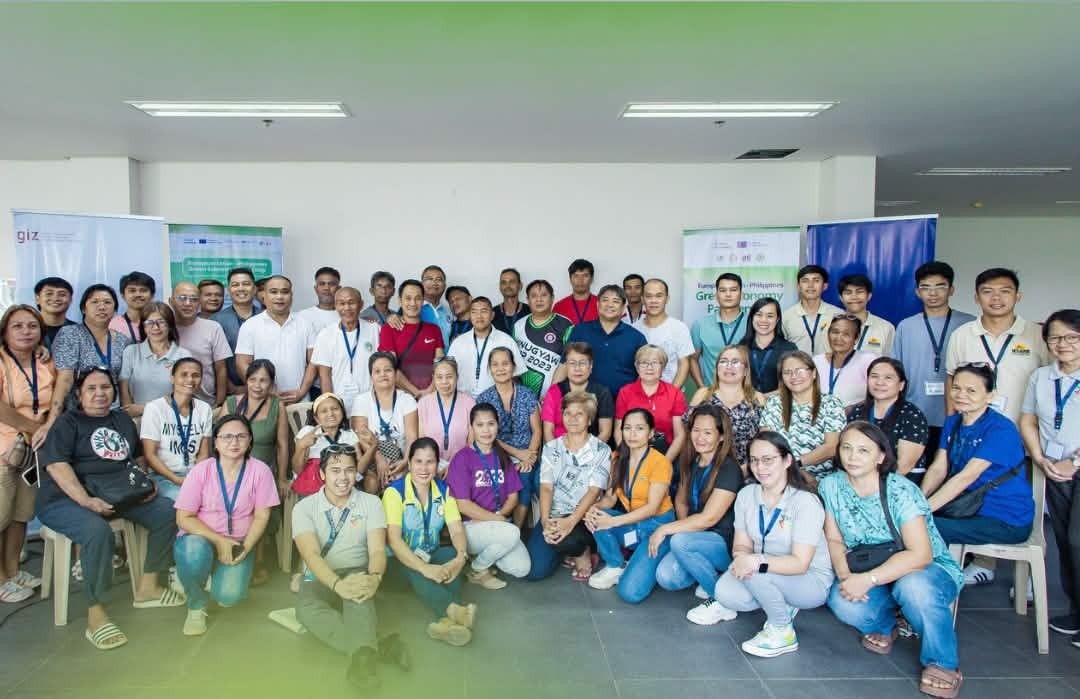
That shift was the focus of the Pre-Training Orientation on Waste Management held 22 May 2026 at LCCB Amistad, where community representatives, barangay personnel, informal waste sector members, private sector partners and technical teams gathered to prepare for the next phase of the Bacolod Circular Biohubs Project, a decentralized system for organic waste valorization and green livelihoods.
The activity brought together 79 participants from Barangays 1, 8, Sum-ag, Pahanocoy, Tangub and Handumanan, along with Ayala Malls collectors, informal waste sector representatives, Bioflyt Agriventures, NISARD, TESDA, La Consolacion College Bacolod and other project partners.
The goal was practical: help communities understand which wastes can be used for Black Soldier Fly technology, vermicomposting and urban organic gardening, and how proper segregation can turn household and commercial waste into livelihood opportunities instead of landfill burden.
“This orientation is important because communities cannot operate the technologies without first understanding the waste,” said Mariecor Palapas, project manager of the Circular Biohubs Project. “When barangays learn how to segregate, prepare and handle organic waste properly, they also begin to see how waste management can support livelihood, food production and cleaner surroundings.”
The Circular Biohubs Project is implemented by La Consolacion College Bacolod with partners including GIZ Philippines, the Department of Environment and Natural Resources-Environmental Management Bureau, barangay local governments, private sector partners, NISARD and Bioflyt Agriventures under the EU-PH Green Economy Partnership.
At its core, the project promotes a simple but often overlooked solution: process organic waste close to where it is generated. Instead of sending biodegradable waste to disposal sites, barangays and partner sites can use Black Soldier Fly larvae to convert food waste into protein-rich biomass, use vermicomposting to produce soil enhancers and strengthen urban gardens that can support household food needs and community-based enterprises.
For residents, that could mean fewer foul-smelling waste piles, better segregation in homes and markets, reduced hauling pressure on barangays and new livelihood possibilities for organized groups, including women, youth and waste workers.
For barangay governments, it could mean stronger compliance with the Ecological Solid Waste Management Act, reduced landfill dependence and more community participation in environmental programs. For urban gardeners and farmers, it could mean access to compost and soil inputs that support food production.
The orientation covered the basics of Republic Act 9003, greenhouse gas emissions from organic waste, types of organic waste, proper handling, vermiculture, composting, urban gardening, health and sanitation, and community benefits. NISARD led the morning sessions, focusing on composting, African Night Crawler vermiculture and organic waste preparation for gardens.
In the afternoon, Bioflyt Agriventures led sessions on the waste problem, Black Soldier Fly technology, waste segregation and sorting, process flow, safe operations, community roles and the income potential of biohub operations.
Participants also joined hands-on waste sorting activities, group discussions, demonstrations, open forums, pre- and post-assessments, and reflection sessions designed to prepare them for the upcoming Training of Trainers.
Maria Carmela Cabreros, training coordinator of the Circular Biohubs Project, said the activity was designed to build confidence before the more technical sessions begin.
“We want participants to feel that they are not just attending a training but preparing to become local champions in their own communities,” Cabreros said. “The project will only succeed if barangays, waste workers, collectors and residents understand their roles and see the benefits in their daily lives.”
The project also puts emphasis on Gender Equality, Disability and Social Inclusion, or GEDSI, by recognizing that waste management work often involves sectors that are economically vulnerable but deeply knowledgeable about community waste systems. By including informal waste workers, barangay representatives, women, youth and local collectors in the orientation, the project aims to ensure that benefits are not limited to technical experts or institutions.
That inclusive approach is important in a city where waste management is not only an environmental concern but a daily governance challenge. Organic waste that ends up in landfills produces methane, a potent greenhouse gas. When properly segregated and processed, however, that same waste can support compost production, animal feed inputs, urban gardens and small enterprises.
The participation of Ayala Malls collectors also showed how private establishments can help strengthen the circular economy by linking commercial waste sources to barangay-based processing systems. If managed well, food waste from malls, markets, households and community kitchens can become part of a local resource loop rather than a disposal problem.
The orientation served as the foundation for the next series of Training of Trainers on Black Soldier Fly technology, vermiculture and organic gardening. These trainings are expected to prepare barangay teams and partner groups to operate decentralized biohubs in project sites across Bacolod.
For Bacolod, the long-term promise of the Circular Biohubs Project is not only cleaner waste management but a community system where residents can participate in climate action through everyday practices: segregating waste, supporting local gardens, reducing disposal costs and creating green livelihoods from resources once thrown away.
As the project moves into technical training and implementation, organizers said sustained community participation will determine whether the biohubs become more than demonstration sites. The goal is to build practical, inclusive and locally owned systems that help Bacolod reduce waste, support food security and show how circular economy solutions can begin at the barangay level.
For media inquiries, please contact Marky Tumalad (mark.tumalad@giz.de)