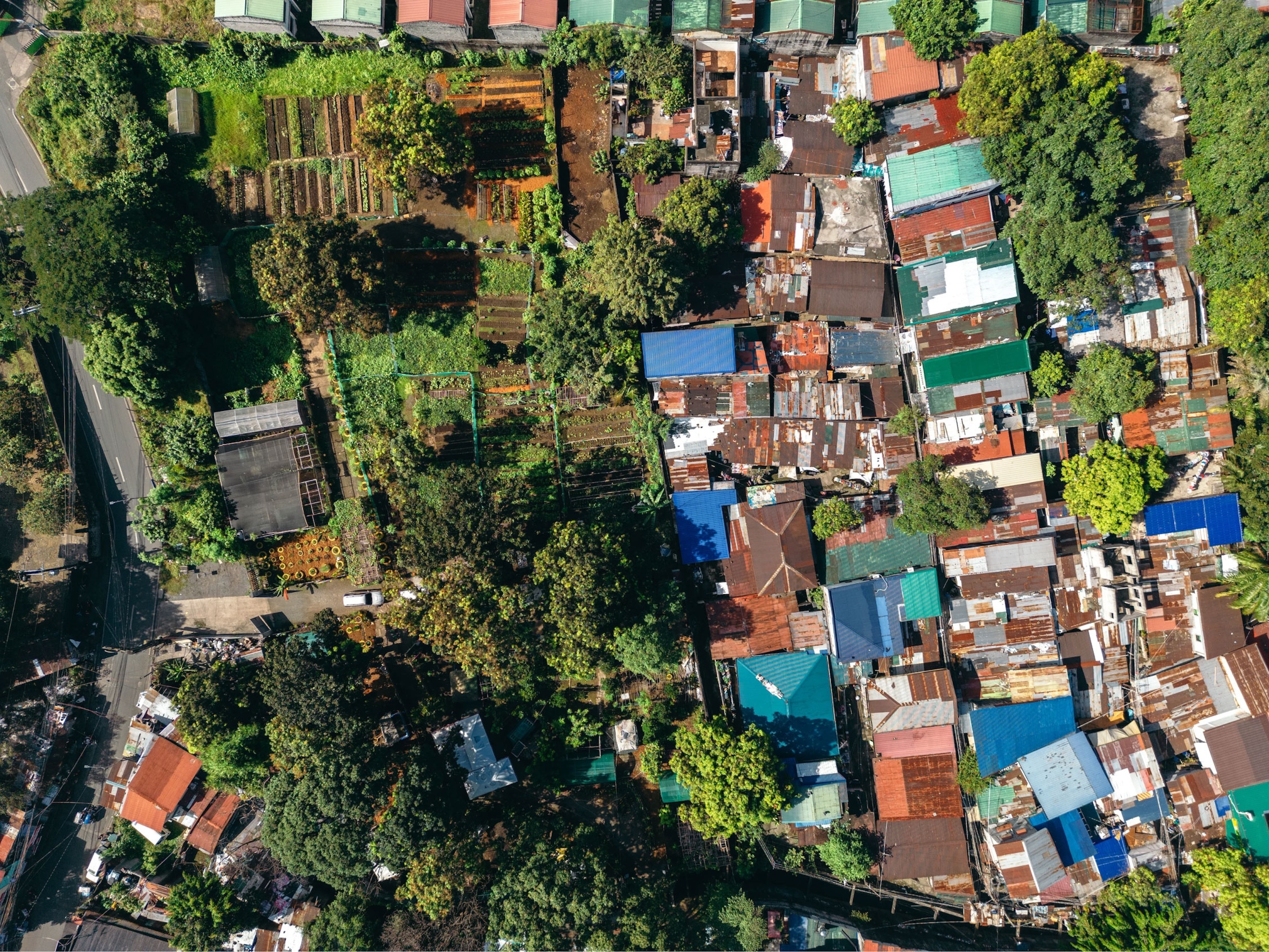
Across the Philippines, organic waste sits at the center of growing environmental and social challenges. Biodegradable waste, primarily food and household waste, makes up more than half of municipal solid waste, much of which ends up in landfills. At the same time, many Filipino households continue to face food insecurity while food systems account for an estimated 25-30 percent of global greenhouse gas emissions.
This picture reflects a deeper systems issue: food is lost, wasted and discarded, even as communities bear the environmental and economic costs.
Yet solutions are taking shape. Across cities and municipalities, more food is rescued for people, animals and organizations in need, and more organic waste is treated as a resource that can support livelihoods and food systems and reduce environmental pressures.

Participants of the organics workshop held April 2026, UNDP Philippines
Strategic systematic support to policy and practice makes circular food systems work
Local governments—cities and municipalities—play a central role in this transition as system drivers and policy implementers. Communities are equally critical, shaping how these systems function in practice.
This shift is not driven by a single intervention, but by enabling systems where local governments, communities, and partners work together to close the loop on waste. Moving beyond traditional waste management requires more than infrastructure; it demands a shift in perspective: avoiding food waste and treating organic waste as a resource to be recovered, processed, and reintegrated into local economies.
 Fish steel trash bins for schools and resorts, and plastic drums for segregated food waste collection in the Island Garden City of Samal, UNDP Philippines
To support this, the European Union, through its Global Gateway initiative, is supporting the EU-Philippines Green Economy Partnership Specific Objective 2 Green Local Government Units (LGUs), spearheaded by the Department of Environment and Natural Resources (DENR) and co-implemented by the Department of Interior and Local Government (DILG) and UNDP. The partnership advances circular food systems by supporting cities to reduce food loss, recover nutrients, and transform organic waste into resources such as compost and bioenergy—while creating jobs and strengthening food security.
Platforms for exchange: Localizing solutions
As part of the systematic support to the partner LGUs, the project has facilitated learning exchanges across partner cities focused on organics circularity. These platforms allow local governments to share experiences, explore practical solutions, and adapt approaches to their own contexts. In April 2026, a second batch of 10 partner cities convened to take concrete steps toward advancing circular food systems. These partner cities include the City of Bacoor, Cagayan de Oro City, Cotabato City, City of Ilagan, Isabela City, Koronadal City, Maasin City, City of San Carlos, City of San Jose del Monte, and the City of Sorsogon.
Through these exchanges, cities can move beyond isolated initiatives and begin building systems that connect policy, practice, and community action.
From learning to implementation: Cities in action
The impact of these efforts is increasingly visible across partner cities, where different approaches are emerging based on local context.
In Puerto Princesa, composting was identified as a priority intervention to address organic waste. With support from the EU-PH Green Economy Partnership, the city trained local staff and community eco-warriors to build the technical capacity needed to operationalize organic waste systems. This initiative now extends to the Correctional Institution for Women (CIW) in Barangay Sta. Lucia, where a composting facility is being prepared.
 Organic waste workshop conducted in Barangay Sicsican, Puerto Princesa, City Environment and Natural Resources and Office of Puerto Princesa
The process has been shaped through consultations with persons deprived of liberty (PDLs), ensuring that the system is grounded in their realities and capacities. In doing so, Puerto Princesa highlights how circular economy solutions can also advance inclusion; bringing often overlooked groups into the process of building and sustaining local systems.
In Baguio, innovation is driving change through black soldier fly technology, where organic waste is converted into compost and animal feed. This approach reduces waste volume while creating new value streams from materials that would otherwise be discarded. Operationalization of the black soldier fly facility in Baguio.
UNDP Philippines
In Ormoc, facilities such as the BioBoost (BiBO) anchor more integrated systems that connect waste processing with agriculture and livelihoods, forming part of a broader city-wide waste management system.
In Iloilo, the focus is on building the conditions for long-term change through training, community engagement, and agriculture initiatives that enable stakeholders to adopt more sustainable practices, including vermicomposting and organic farming.
 Participants during the 'I Bike, We Farm' fun ride organized by the Office of the City Agriculturist in Iloilo to promote circular agricultural systems in the city, UNDP Philippines
Scaling what works
Across cities, a consistent pattern is emerging meaningful change happens when communities are enabled to act, collaborate, and shape the systems around them.
“This partnership is about providing a platform where local governments, the private sector, and partners can come together... to make sure that the national legislation is implemented, that is funding at local level, and we bring in the private sector with investments in order to work on the sustainability of what we’re doing,” said Dr. Marco Gemmer, Head of Cooperation, European Union Delegation to the Philippines.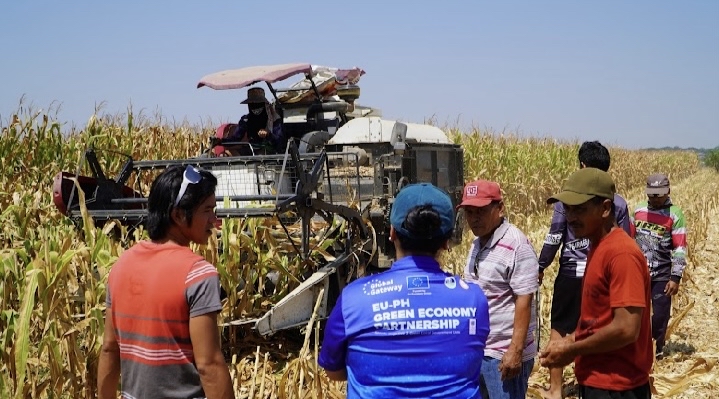 Visiting a corn farm in the City of Ilagan, City Information and Community Relations Office
Dr. Al Orolfo of DENR emphasized that circular food systems offer opportunities beyond compliance.
Organic waste may seem ordinary: generated daily in kitchens, markets, and farms, but it sits at the intersection of climate, food, and livelihoods. How it is managed determines whether it becomes a source of emissions and environmental pressure, or a resource that supports local economies and ecosystems.