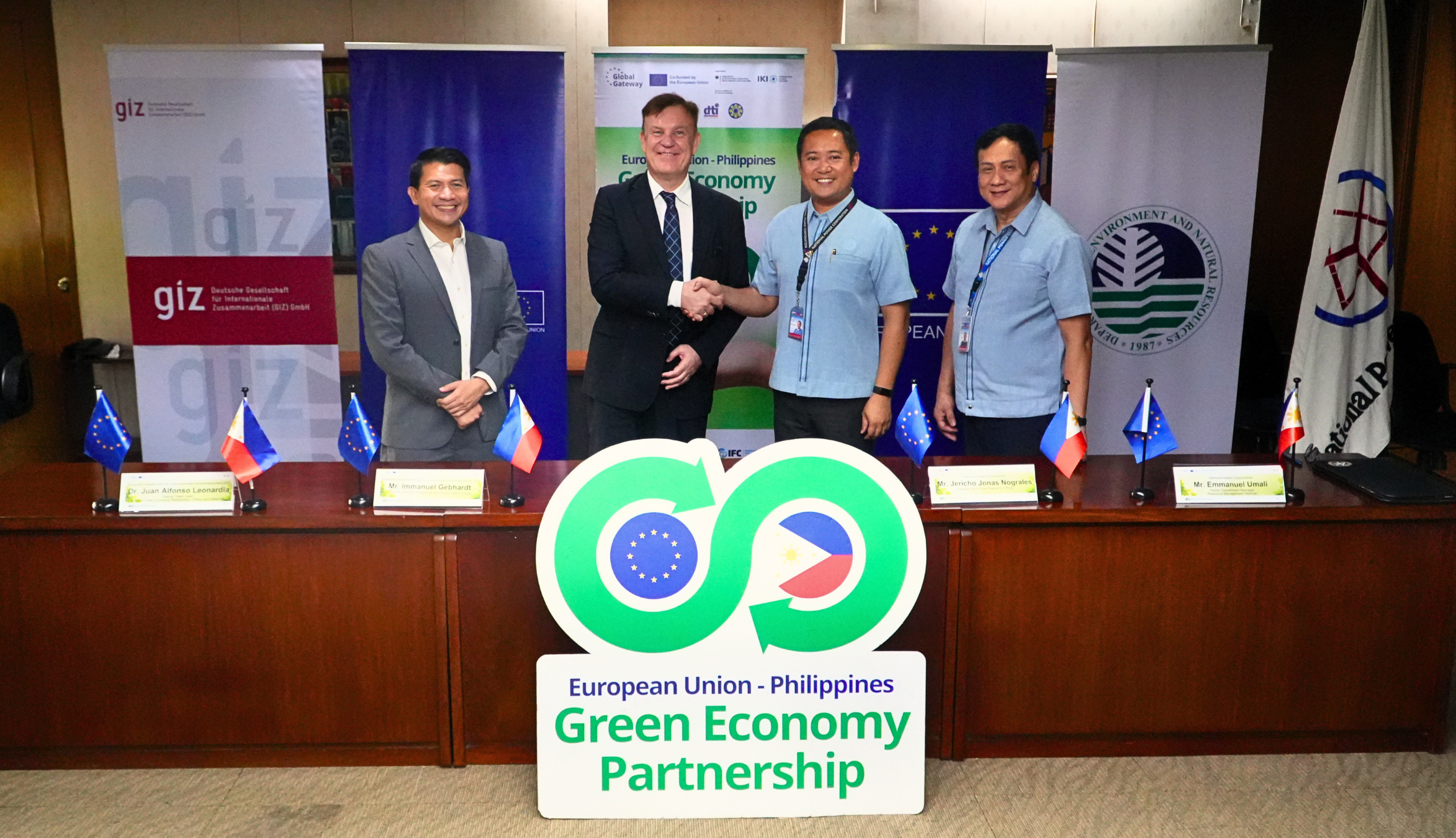
QUEZON CITY, Philippines, 21 July 2026 — The National Power Corporation (NAPOCOR) and the European Union–Philippines Green Economy Partnership, through the Deutsche Gesellschaft für Internationale Zusammenarbeit (GIZ) GmbH, have signed a Memorandum of Understanding (MOU) to undertake a Pre-Feasibility Study that will assess the potential of converting water hyacinth into biomethane, laying the groundwork for future renewable energy investments while advancing the country's circular economy transition.
The partnership supports “Project Lily”, a NAPOCOR-led initiative that seeks to transform invasive water hyacinth found in NAPOCOR-managed hydroelectric facilities into a sustainable source of renewable energy. It is supported under the broader framework of the European Union-Philippines Green Economy Partnership, a ₱3.67 billion (€60 million) flagship programme of the European Union under its Global Gateway initiative, the European strategy engaging with partners globally and promoting investments around shared priorities such as the transition to a green economy.
The Policy and Alliances component of the programme – co-funded with a €12 million grant from the European Union and a €1 million contribution from the International Climate Initiative of the German Federal Ministry for the Environment, Climate Action, Nature Conservation, and Nuclear Safety and implemented by GIZ Philippines – supports policy-driven demonstration projects to pilot and scale innovative solutions on circular economy including improving energy efficiency and promoting renewable energy use.
Turning an Environmental Challenge into a Renewable Energy Opportunity
Water hyacinth has long posed operational challenges in reservoirs by obstructing water flow and affecting hydropower operations. Project Lily aims to determine whether the invasive biomass can instead become a valuable renewable energy resource that contributes to greenhouse gas reduction, improved watershed management, and energy security. Through the European Union-Philippines Green Economy Partnership, the initiative combines NAPOCOR's expertise in hydropower operations and watershed management with research, innovation and knowledge exchange between European and Filipino partners from the government and private sector.
As part of its cooperation with NAPOCOR, the programme will finance and manage the conduct of the Pre-Feasibility Study, including the engagement of qualified technical consultants from the German Biomass Research Center (DBFZ) – one of Europe’s leading biomass and bioenergy research center. The study will assess biomass availability, technology options, engineering feasibility, environmental and social safeguards, financial viability, regulatory requirements, and potential investment pathways needed to determine whether the project can proceed to implementation. Laboratory testing and resource assessment will be conducted by a local academic partner, facilitated by the Quality Assurance & Quality Control oversight of DBFZ, creating a lasting national capability in biomass and feedstock analysis that can support future circular economy initiatives beyond the project.
NAPOCOR, for its part, will provide access to project sites and relevant facilities, facilitate coordination with local government units and key stakeholders, and share operational and technical information necessary for the successful completion of the study.
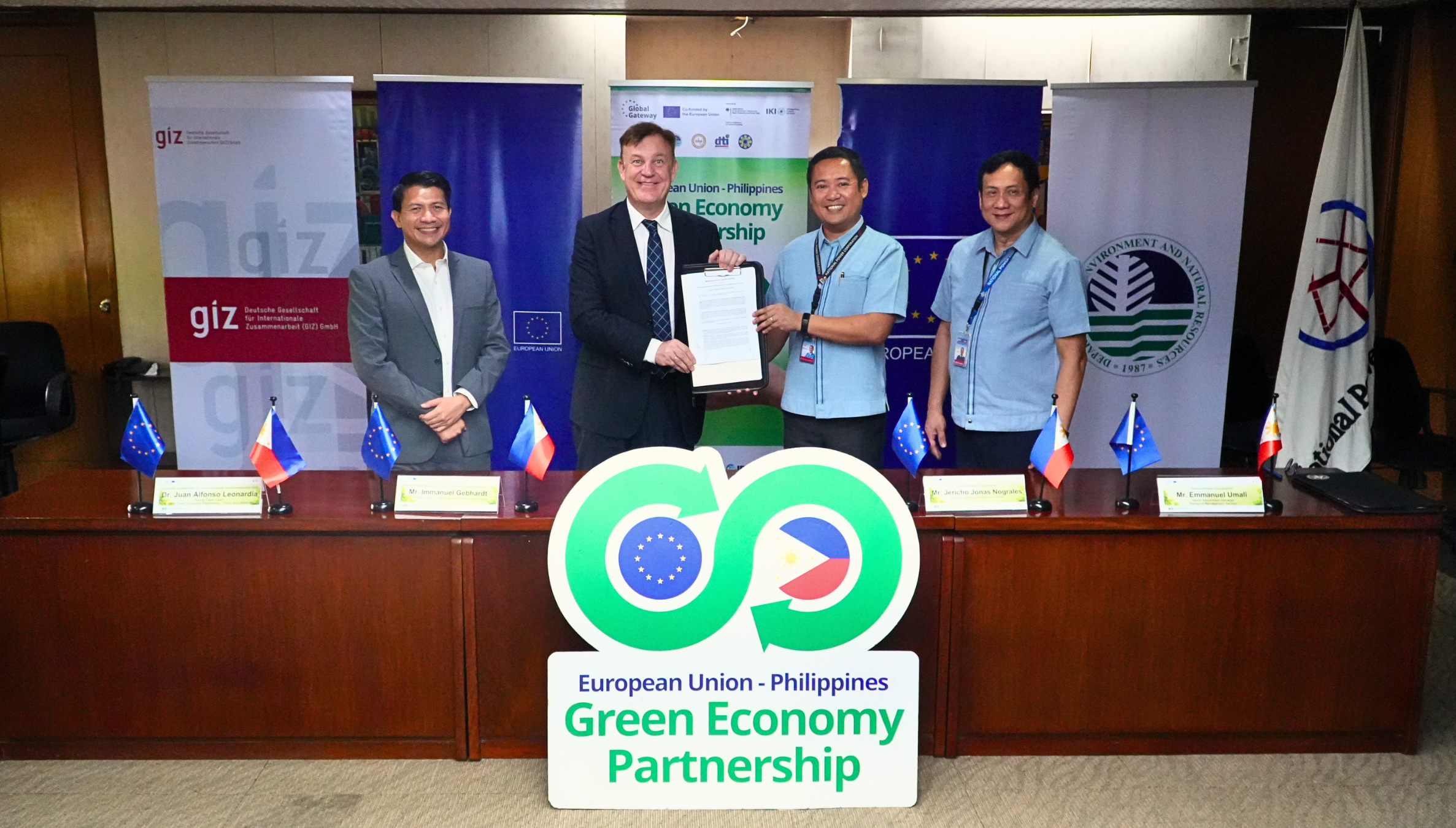
Partnering for Innovation and International Cooperation
Speaking during the ceremonial signing, NAPOCOR President and Chief Executive Officer Jericho Jonas B. Nograles emphasized how this initiative can transform an environmental challenge into a sustainable solution.
"Project Lily reflects our belief that every challenge presents an opportunity. For years, water hyacinth has disrupted our operations, but today we begin exploring how it can become part of the solution. Through this partnership, we are taking the first step toward transforming an environmental burden into a renewable energy resource and as a potential model that can be replicated in communities across the Philippines and beyond."
Meanwhile, GIZ Philippines and the Pacific Island Countries Country Director Immanuel Gebhardt underscored the importance of international cooperation and innovation in advancing the green transition.
"Today's ceremony represents a shared commitment to pursue innovative and practical solutions for sustainable development. Project Lily embodies the principles of the circular economy by demonstrating that what is often regarded as waste can instead become a valuable resource. Together with our partners, we look forward to generating the knowledge needed to determine whether this concept can become a technically, environmentally, and economically viable solution for the Philippines."
The initiative supports the Philippines' transition toward cleaner energy systems, enhances energy sovereignty, strengthens climate resilience, and promotes sustainable resource management. In line with the European Union’s Global Gateway strategy, Project Lily can potentially unlock investment opportunities in the renewable energy sector by fostering partnership among European and Philippine stakeholders that support the country’s transition to a circular economy.
For media inquiries, please contact Marky Tumalad (mark.tumalad@giz.de)