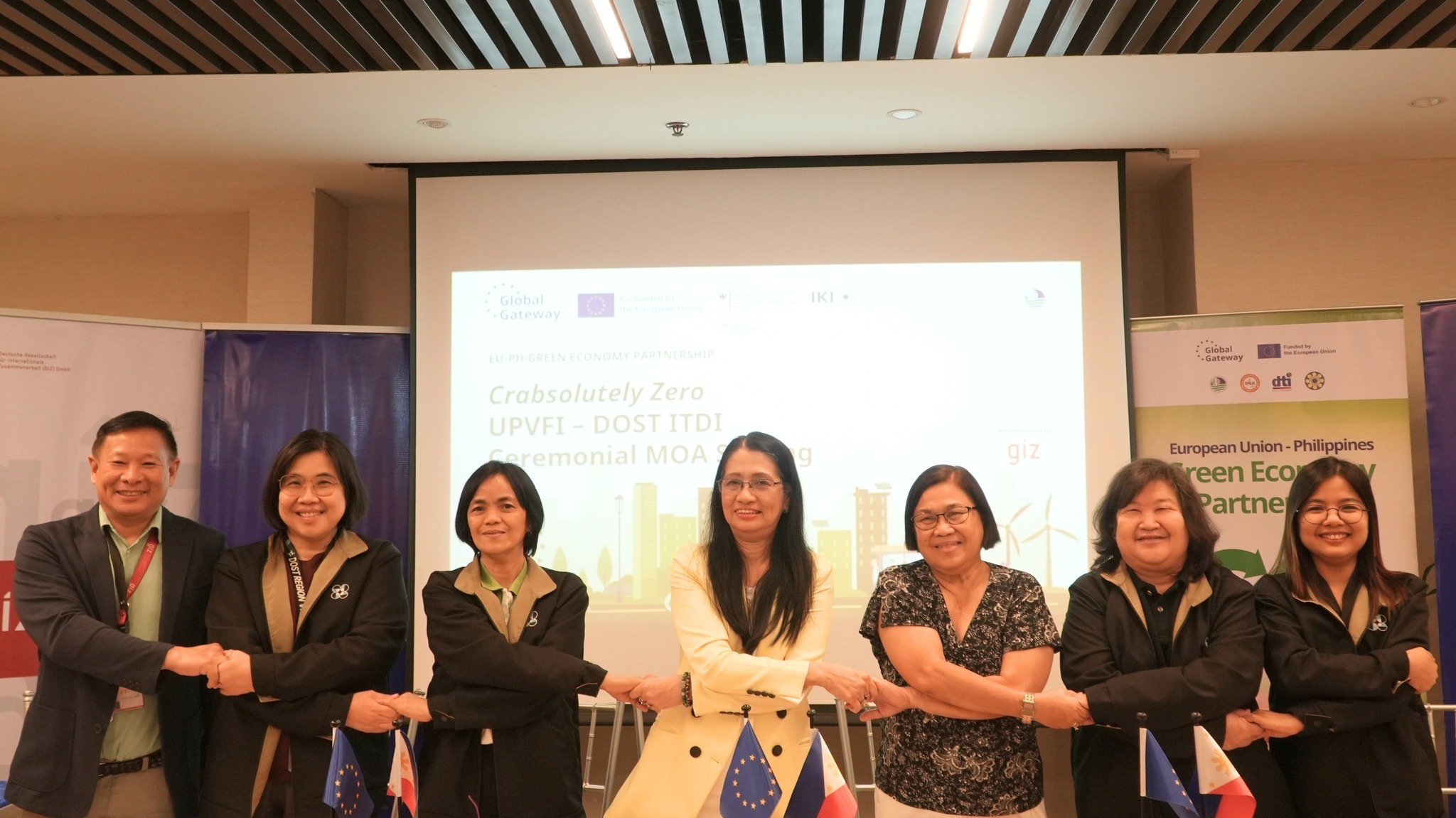
ILOILO CITY, Philippines — The University of the Philippines Visayas Foundation Incorporated (UPVFI) and the Department of Science and Technology – Industrial Technology Development Institute (DOST-ITDI) officially seals its Memorandum of Agreement (MOA) as key implementing partners of the Crabsolutely Zero (CrabZero) research program, supported under the European Union-Philippines Green Economy Partnership.
CrabZero is a demonstration project that seeks to convert blue swimming crab and other crustacean processing waste into high-value biomaterials, including chitosan, bioactive compounds, and sustainable packaging materials. By redirecting waste that would otherwise burden coastal ecosystems, the program aims to create new economic opportunities by providing new livelihood opportunities for coastal communities and to generate tangible investment opportunities for international and European firms by exploring sustainable alternatives to plastic packaging.
CrabZero is implemented under the broader framework of the European Union-Philippines Green Economy Partnership, a ₱3.67 billion (€60 million) flagship programme of the European Union (EU) under its Global Gateway initiative, the European strategy engaging with partners globally and promoting investments around shared priorities such as the transition to a green economy. The Policy and Alliances component of the programme – co-funded with a €12 million grant from the European Union and a €1 million contribution from the International Climate Initiative of the German Federal Ministry for the Environment, Climate Action, Nature Conservation, and Nuclear Safety and implemented by GIZ Philippines – supports policy-driven demonstration projects to pilot and scale innovative solutions on circular economy.
Held in Citadines Hotel, Iloilo City, the ceremonial signing marks a decisive step toward building a circular economy model for crustacean waste valorization in the Philippines, one that links scientific innovation directly to the livelihoods of coastal fishing communities.
The MOA formalizes the roles and commitments of the University of the Philippines Visayas Foundation Incorporated (UPVFI), the University of the Philippines Visayas (UPV) and the Department of Science and Technology – Industrial Technology Development Institute (DOST-ITDI).
Supporting the program as collaborators are the Department of Agriculture - Bureau of Fisheries and Aquatic Resources Region VI (DA - BFAR Region VI); the Local Government Unit of Concepcion, Iloilo; Brgy. Igbon Kasagaran Association (BIGKAS), a community-based fisherfolk organization in Concepcion, Iloilo; Northern Iloilo State University (NISU) Concepcion Campus; and the Monterey Bay Aquarium Seafood Watch Program.
The event also served as a technical and financial monitoring activity, with program leader Prof. Encarnacion Emilia S. Yap, Professor and Vice Chancellor at the University of the Philippines Visayas, presenting a comprehensive overview of the project's goals, planned activities, fund utilization, and achievements.
“CrabZero is not just about what we can extract from waste, it is about what we can build from it. We are establishing a model that closes the loop between fisheries processing and our coastal community [livelihood], ensuring that the value generated from crustacean by-products flows back to the people who depend on the sea.” said by Prof. Encarnacion Emilia S. Yap, Program Leader, CrabZero; Vice Chancellor, University of the Philippines Visayas.
Central to the CrabZero approach is the direct involvement of coastal fishing communities in Conception, Iloilo — one of the country's key blue swimming crab processing areas. By working alongside BIGKAS, the program ensures that research outputs are grounded in local realities and that livelihood opportunities are embedded within the project design from the outset.
Building on the momentum of the ceremonial Memorandum of Agreement (MOA) signing, the Crabsolutely Zero (CrabZero) program convened its second day of activities on April 24, 2026, at the Regional Research Center (RRC) Function Hall, University of the Philippines Visayas, Miagao, Iloilo. The day brought together implementing and project partners for a structured program that moved from institutional accountability to inclusive practice to hands-on scientific immersion.
The morning session opened with financial reporting presentations from the two lead implementing institutions: UPVFI and the DOST-ITDI. Both institutions presented their respective fund utilization reports, reinforcing the program's commitment to transparent governance and responsible stewardship of public and European Union resources. The financial reporting component also served as a technical monitoring activity, ensuring that the program's expenditures and resource allocation remain aligned with the objectives outlined in the MOA signed the previous day.
The morning session concluded with a Gender Equality, Disability, and Social Inclusion (GEDSI) Orientation facilitated by GIZ Philippines. The orientation emphasized that a program operating at the intersection of fisheries science and coastal community development must be deliberate in addressing the distinct needs, roles, and vulnerabilities of women, persons with disabilities, and marginalized social groups, particularly within the fishing communities of Conception, Iloilo, where CrabZero's community-based work is centered.
The afternoon session shifted from the conference room to the laboratory, as stakeholders were taken on an immersive tour of the University of the Philippines Visayas' key research facilities each directly relevant to CrabZero's scientific scope.
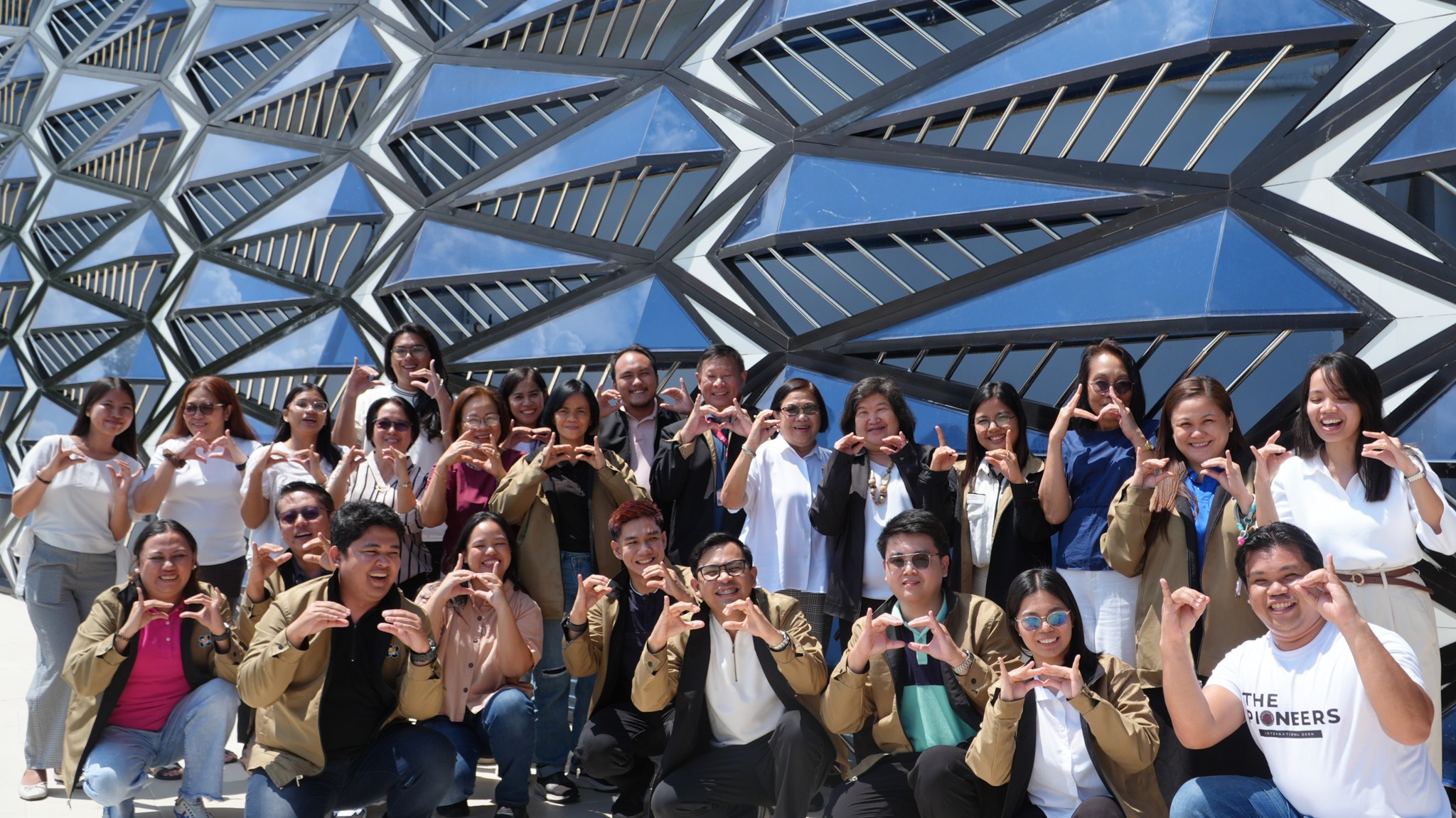
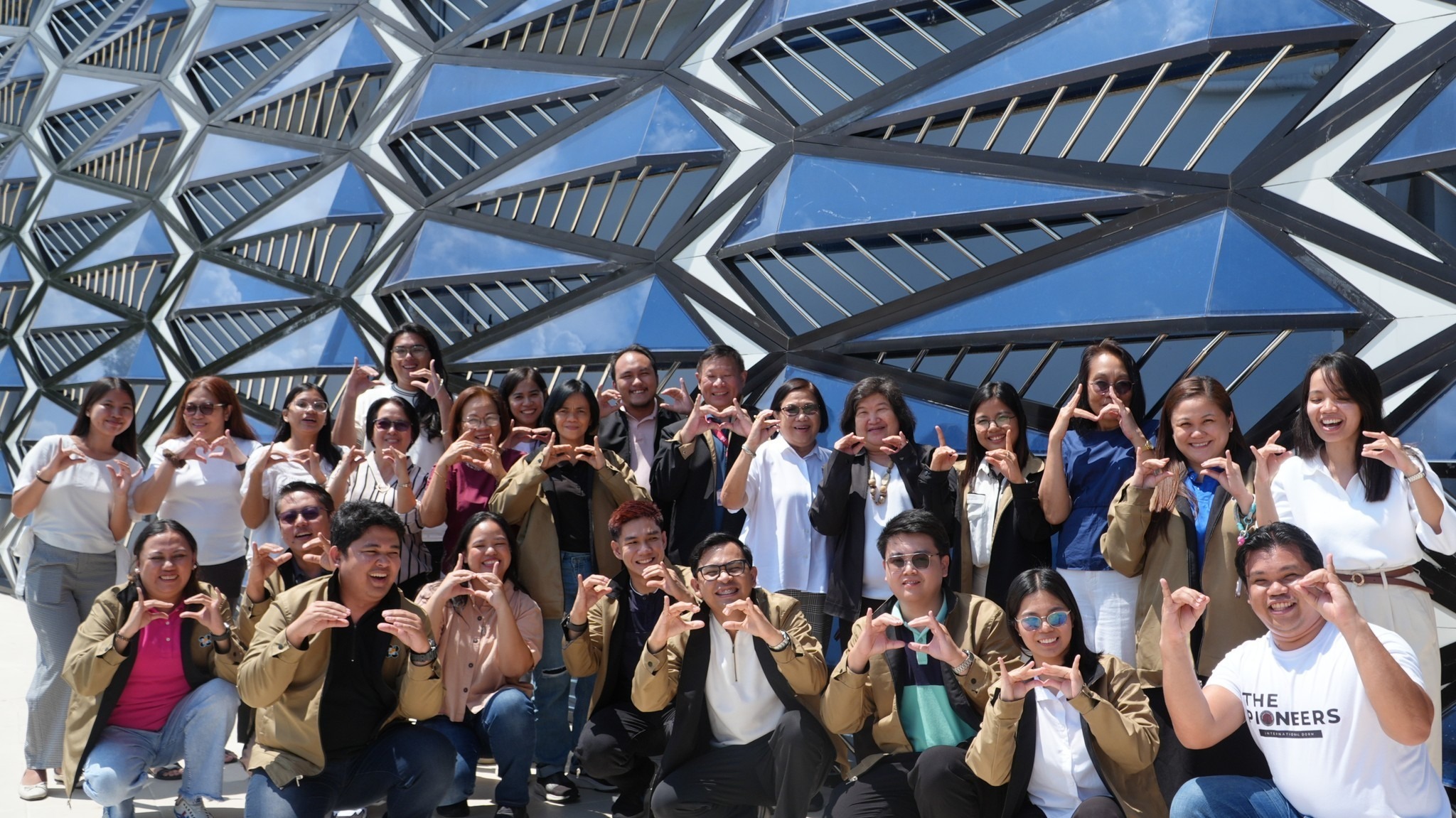
The tour covered the Regional Research Center (RRC); the Food, Feeds, and Functional Nutrition Laboratory (FFFNL); the Philippine Genome Center – Visayas (PGC-Visayas; the Institute of Fish Processing Technology (IFPT) Laboratories; and the Institute of Aquaculture (IA) Hatchery. The laboratory tour provided implementing and project partners with a concrete picture of the scientific infrastructure that will drive CrabZero's research outputs.
With two days of substantive institutional, technical, and scientific engagement, the CrabZero program moves forward with a formalized partnership structure, a gender-responsive implementation framework, and a shared understanding of the research capabilities that will carry the program's circular economy vision from laboratory to coastline.
Insights from the CrabZero program will support further development of the Blue Swimming Crab National Management Plan by DA-BFAR and the Bioplastics Industry Roadmap of DTI-Bureau of Investments (BOI). Moreover, the project offers a viable green investment opportunities with the crab industry players in the Philippines with international and European organizations, strengthening international partnership and collaboration on sustainable consumption and production.
For media inquiries, please contact:
Marky Tumalad, mark.tumalad@giz.de