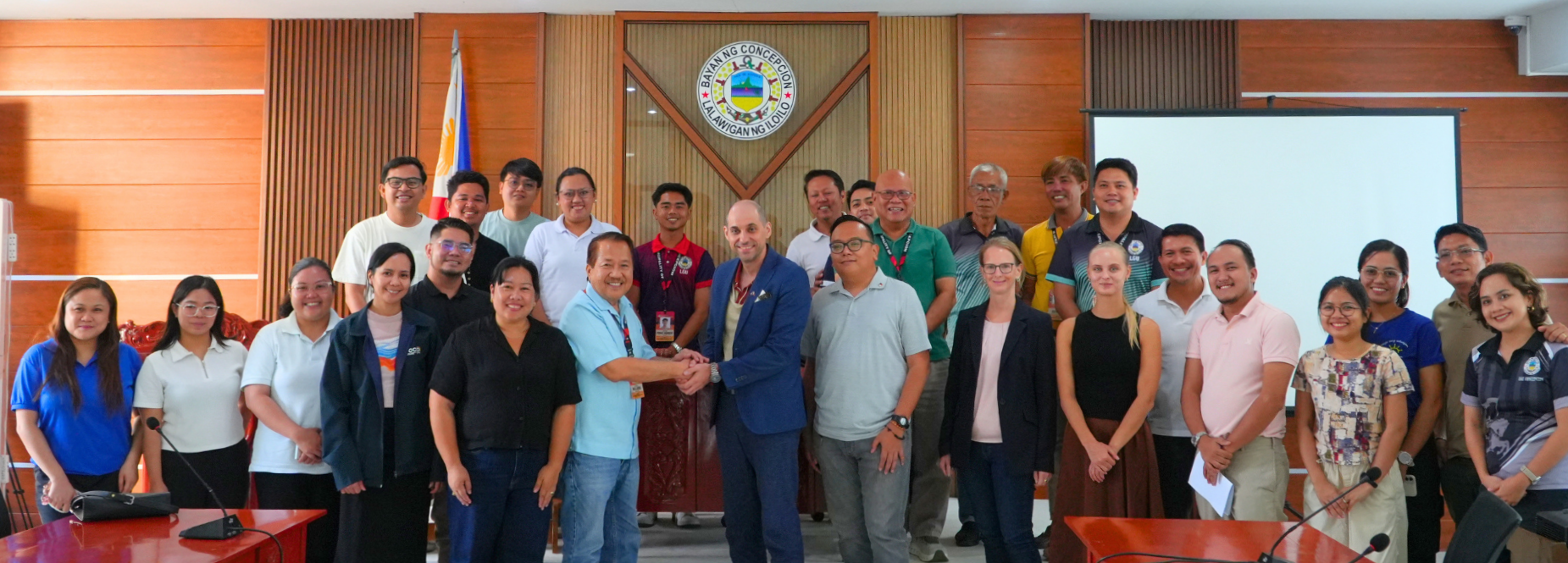
ILOILO CITY, June 10, 2026 — The University of the Philippines Visayas (UPV) Seafood PRIME Laboratory joined government leaders and sustainability advocates in a high-level investment meeting with the European Union Delegation to the Philippines exploring the future of green growth in Iloilo Province.
Hosted at the Iloilo Provincial Hall, the meeting gathered representatives from the European Union in the Philippines, the Provincial Government of Iloilo, and project partners to discuss opportunities for advancing sustainability initiatives through innovation, investment, and international collaboration.
The dialogue formed part of ongoing engagements under the European Union-Philippines Green Economy Partnership, a flagship programme of the European Union under its Global Gateway initiative, the European strategy engaging with partners globally and promoting investments around shared priorities such as the transition to a green economy.
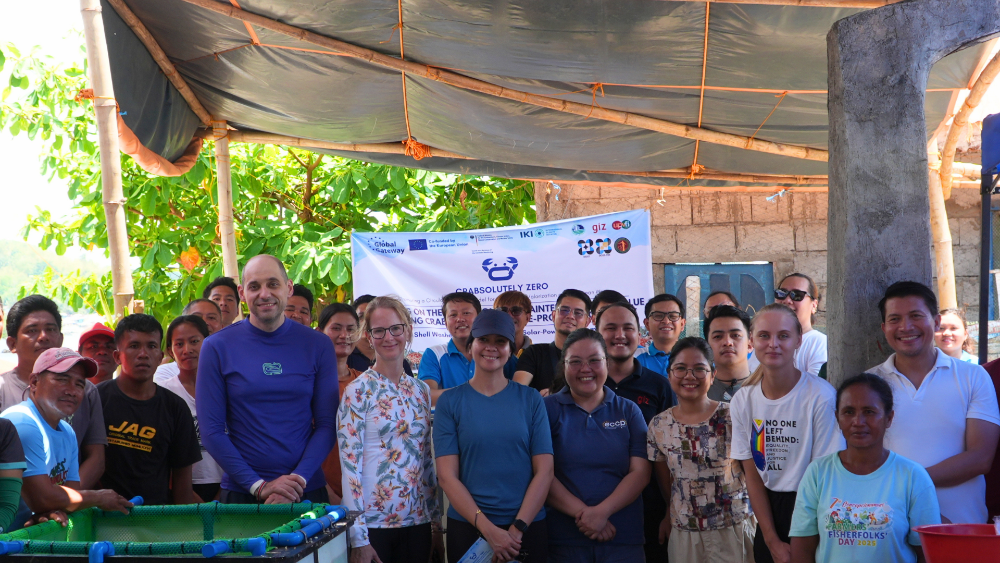
In his opening remarks, Tsvetomir Svilenov, Program Manager at the European Union Delegation to the Philippines, emphasized the importance of collaborative approaches and quality partnerships in advancing green economy initiatives. Ada-Stina Pesamaa, Program Officer at the Europea Union Delegation to the Philippines, reinforced the European Union's continued support for sustainable development efforts in the country.
Representing the UPV Seafood PRIME Laboratory were Prof. Encarnacion Emilia Yap and Ms. Gardel Xyza Silvederio, who participated as representatives of Components 2 and 3 of the Crabsolutely Zero (CrabZero) Project, a demonstration project supported by the European Union-Philippines Green Economy Partnership that transforms blue swimming crab processing waste into high-value products and promotes circular economy practices within coastal communities.
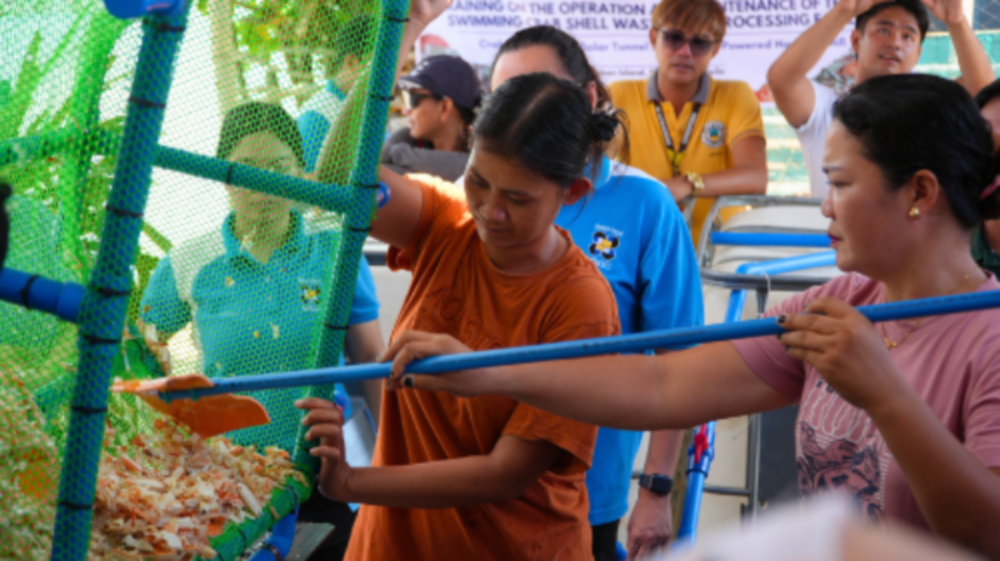
Through the CrabZero Project, the laboratory and its project partners will demonstrate how seafood processing by-products, traditionally viewed as waste, can be converted into valuable resources, creating new livelihood opportunities for fisherfolks and accelerating green investment opportunities for international and European firms.
As conversations evolved, stakeholders explored prospects for scaling circular economy solutions, expanding the utilization of blue swimming crab resources, and integrating renewable technologies into local industries. The Provincial Government of Iloilo likewise expressed interest in identifying communities and development areas that may benefit from future partnerships and investments.
For UPV Seafood PRIME Laboratory, the meeting recognized how science-based solutions can advance circular economy transformation. By bringing together researchers, policymakers, and international partners, initiatives such as CrabZero are helping build pathways toward a more resilient and inclusive circular economy.
—
CrabZero is implemented under the broader framework of the European Union-Philippines Green Economy Partnership, a ₱3.67 billion (€60 million) flagship programme of the European Union (EU) and led by the Department of Environment and Natural Resources (DENR). This priority programme of the EU in the Philippines links European and Filipino partners from the private sector and the local government to foster a circular economy while sustaining economic growth that benefits all Filipinos.
The Policy and Alliances component of the programme – co-funded with a €12 million grant from the European Union and a €1 million contribution from the International Climate Initiative of the German Federal Ministry for the Environment, Climate Action, Nature Conservation, and Nuclear Safety and implemented by GIZ and DENR-Environmental Management Bureau – supports policy development and fosters strong partnerships.