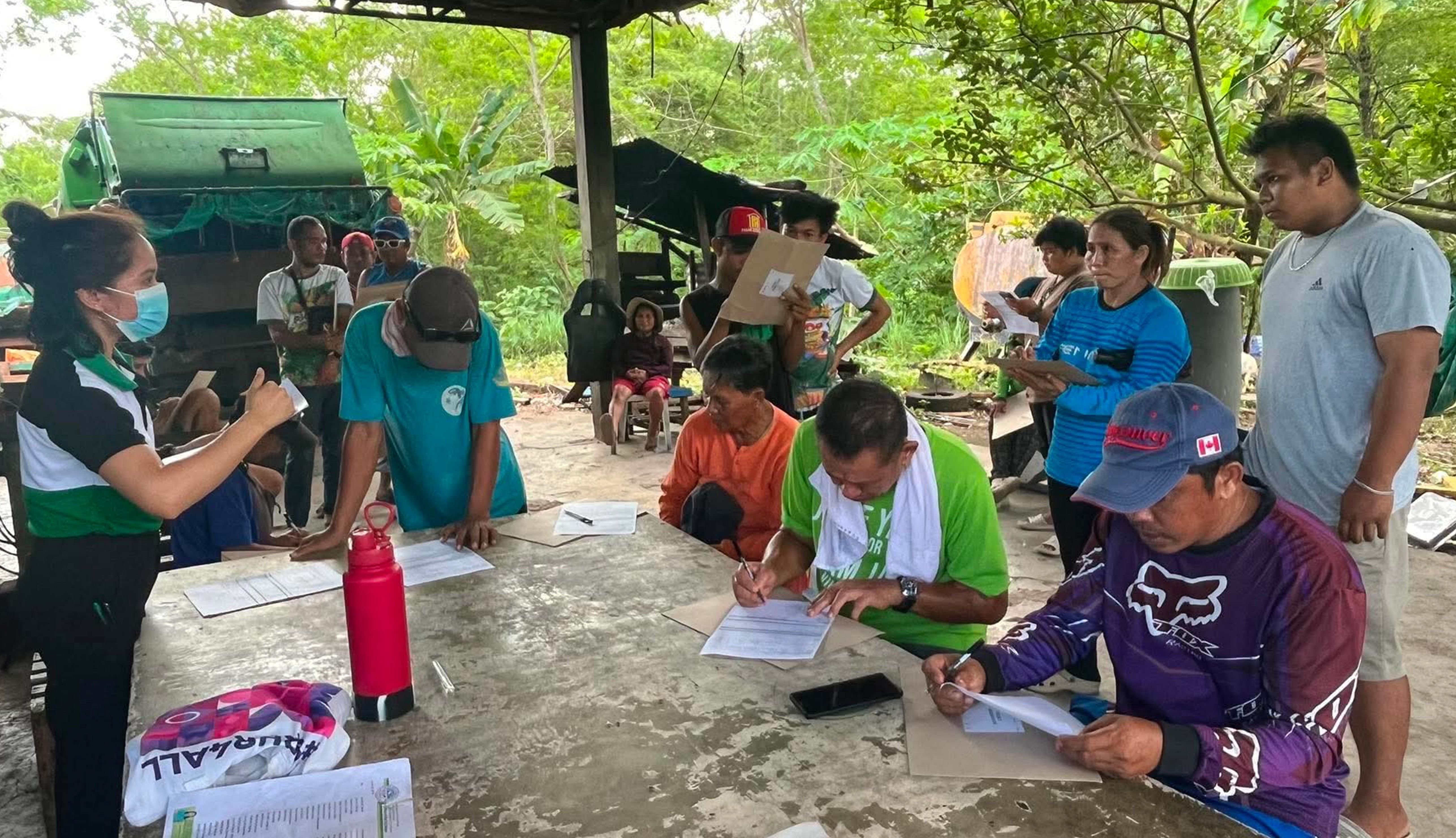
With support from the European Union–Philippines Green Economy Partnership, the EPR-Driven Project successfully conducted separate project orientation sessions for Informal Waste Workers (IWWs) and junkshop owners and operators in Tagbilaran City. The orientation for Informal Waste Workers was held on July 7, 2026, while the orientation for junkshop owners or operators took place on July 8, 2026.
The orientation sessions aimed to align the project's vision, objectives, and expected outcomes with its key stakeholders, clarify the roles and responsibilities of project partners and participants, define the project's scope and deliverables, and establish effective communication and coordination mechanisms throughout project implementation.
The project is being implemented through a partnership between the Bohol Integrated Development Foundation (BIDEF) and the Participatory Research, Organization of Communities and Education towards Struggle for Self-reliance in Bohol (PROCESS-Bohol) under the European Union–Philippines Green Economy Partnership. The EPR-Driven Project aims to accelerate Tagbilaran City’s transition to a circular economy by advancing sustainable solid waste management practices in compliance with the Extended Producer Responsibility (EPR) Act of 2022. Furthermore, the project aims to foster knowledge sharing and attract green investments from European EPR organizations, such as sorting, recycling technologies, deposit return systems, waste tracking systems, and other plastic circularity and green packaging innovations.
Activity Highlights:
The orientation for Informal Waste Workers was attended by 45 participants from the Tagbilaran City Central Materials Recovery Facility (MRF), consisting of 10 waste sorters and segregators and 35 waste collectors. Meanwhile, the orientation for junkshops gathered 12 junkshop owners and operators from different parts of the city.
The activity was also attended by representatives from the Tagbilaran City Environment Management Office (TCEMO) headed by Engr. Raul II Aparicio, who presented the city's priority development concerns focusing on water, traffic, and solid waste management. These priority areas are integrated into the strategic agenda and long-term vision of the City Government of Tagbilaran, reinforcing the importance of collaborative efforts among government agencies, private stakeholders, and the informal waste sector in achieving a cleaner, greener, and more sustainable city.
The project orientation also provided an opportunity for participants to better understand the significance of the EPR system and the vital role of junkshops and Informal Waste Workers in improving plastic waste recovery and strengthening the local circular economy. Through enhanced collaboration, capacity building, and stakeholder engagement, the project aims to build an inclusive and resilient waste management system that benefits both the environment and the livelihoods of local waste workers.
The EPR-Driven Project is an initiative under the European Union - Philippines Green Economy Partnership, a P3.67 billion (€60 million) priority programme of the European Union under its Global Gateway initiative - the European strategy engaging with partners globally and promoting investments around shared priorities such as the transition to a green economy. Led by the Department of Environment and Natural Resources (DENR), this programme links European and Filipino partners from the private sector and the local government to foster a circular economy while sustaining economic growth that benefits all Filipinos. The Policy and Alliances component of the programme – co-funded with a €12 million grant from the European Union and a €1 million contribution from the International Climate Initiative of the German Federal Ministry for the Environment, Climate Action, Nature Conservation, and Nuclear Safety and implemented by GIZ Philippines and DENR-Environmental Management Bureau – supports policy development and fosters strong partnerships.