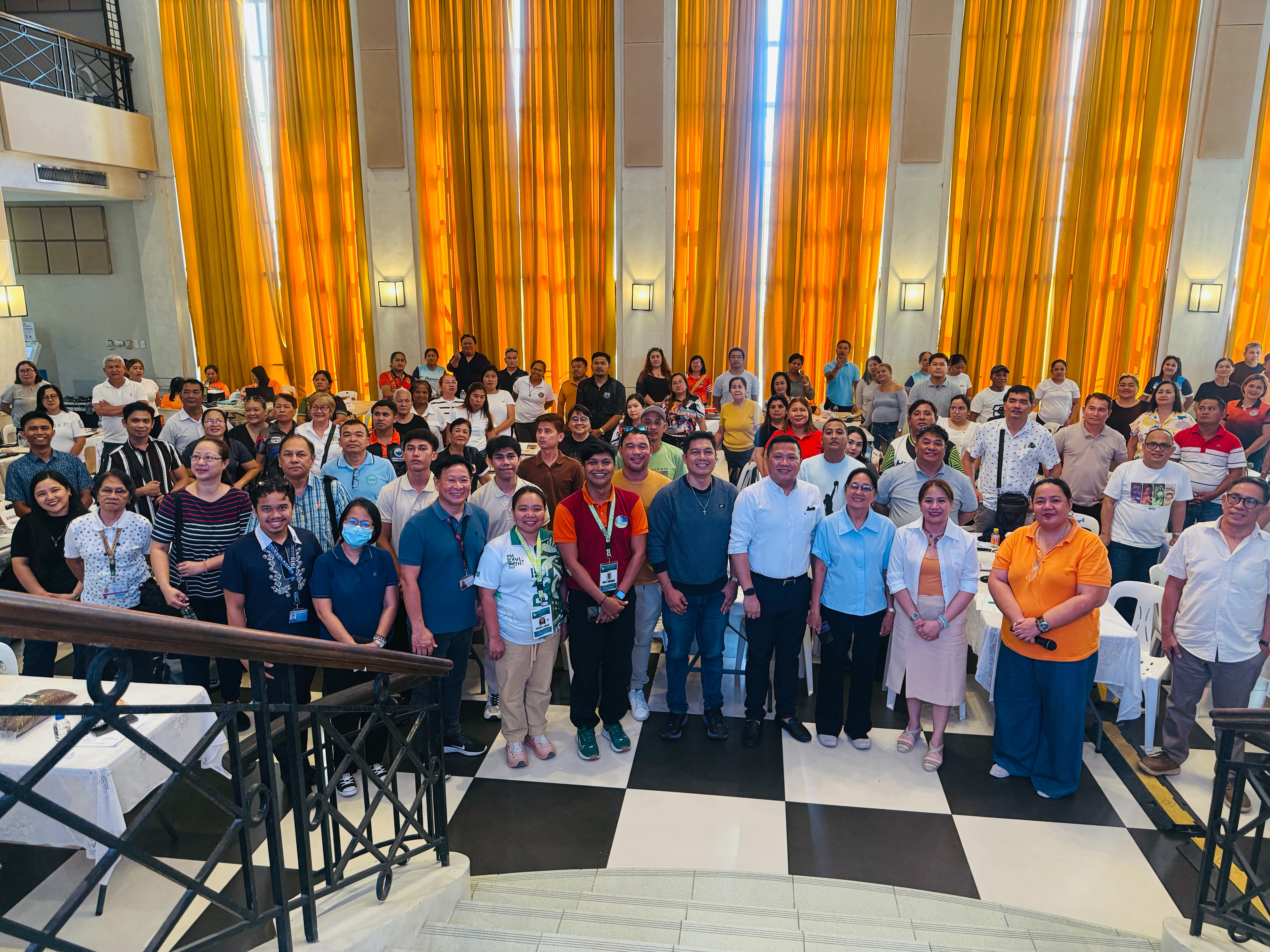
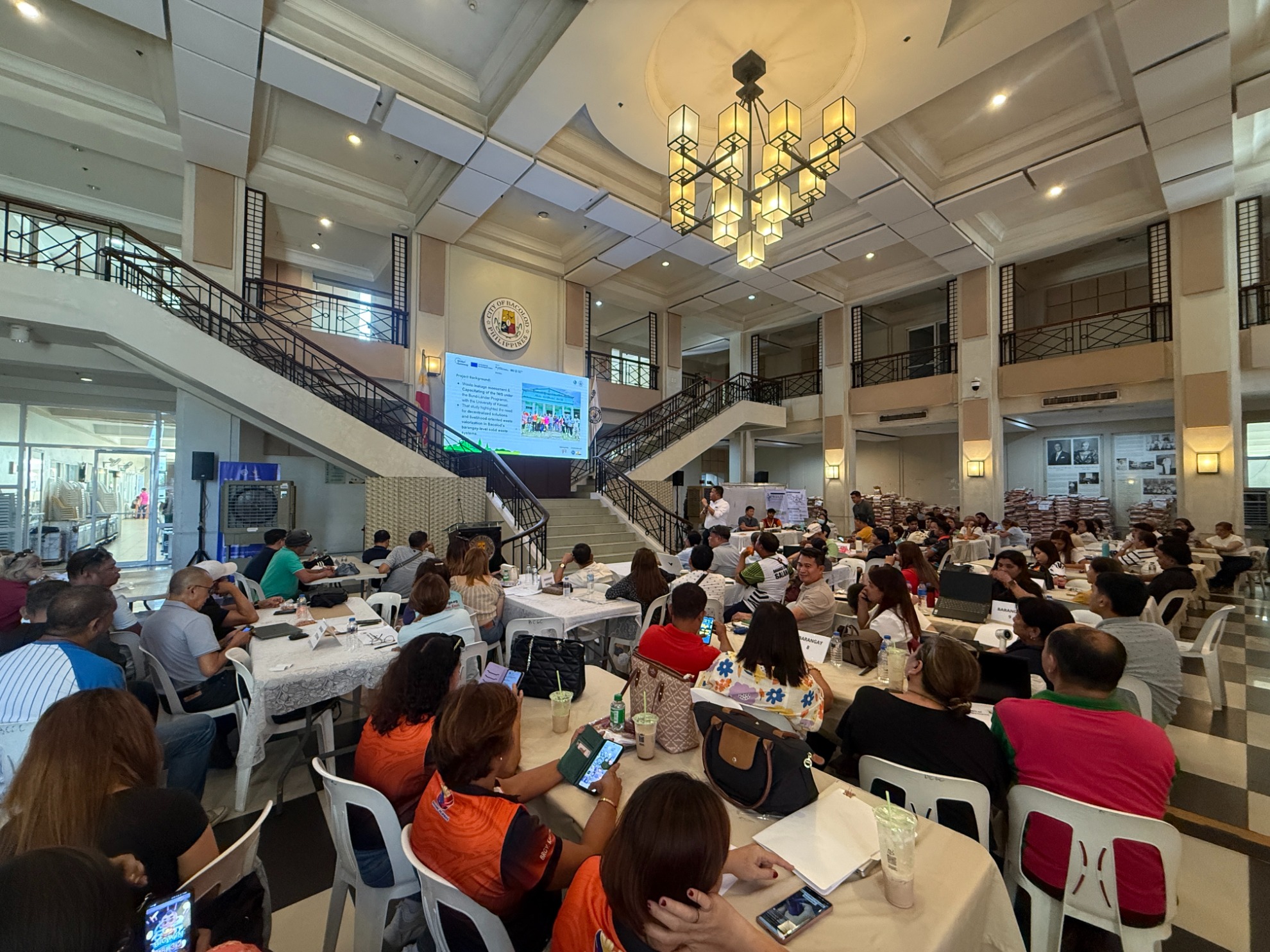
BACOLOD CITY — European Union-backed circular economy initiatives are helping transform Bacolod City’s organic waste challenges into opportunities for green investments, community livelihoods, and sustainable growth through innovative waste-to-value technologies showcased to barangay leaders during the Barangay Solid Waste Management Planning activity organized by the Bacolod Environment and Natural Resources Office (BENRO) on May 6.
This activity is supported by the Circular Biohubs Project, a demonstration project under the Policy and Alliances component of the European Union–Philippines Green Economy Partnership – a ₱3.67 billion (€60 million) flagship programme of the European Union (EU) under its Global Gateway initiative, the European strategy engaging with partners globally and promoting investments around shared priorities such as the transition to a green economy. The Policy and Alliances component of the programme – co-funded with a €12 million grant from the European Union and a €1 million contribution from the International Climate Initiative of the German Federal Ministry for the Environment, Climate Action, Nature Conservation, and Nuclear Safety and implemented by GIZ Philippines – supports policy-driven demonstration projects to pilot and scale innovative solutions on circular economy.
Through the Circular Biohubs Project, local communities are being introduced to decentralized systems that convert organic waste into compost, animal feed inputs, and other high-value products supporting climate action, livelihood generation, and emerging green investment opportunities in the city through the
The activity brought together barangay officials and local partners to present practical circular economy technologies being piloted in Bacolod City, including black soldier fly larvae processing, vermicomposting, bokashi composting, and other regenerative solutions designed to reduce landfill waste while creating economic value from organic materials.
Project partners emphasized that the initiative goes beyond waste diversion by helping build local ecosystems that can attract investments in sustainable waste management, urban agriculture, resource recovery, and green enterprise development.
Terence Paul Dacles, Senior Technical Advisor of GIZ Philippines, said Bacolod’s experience demonstrates how local governments can become strategic partners in advancing the country’s green transition.
“The EU-PH Green Economy Partnership is designed to help local governments, communities, and businesses transition toward greener, more inclusive, and circular systems. Bacolod is emerging as an important demonstration site for how local partnerships can turn environmental challenges into economic opportunities,” Dacles said.
He added that demonstration projects like Circular Biohubs help create enabling conditions for future partnerships with international organizations, impact investors, and European firms interested in scalable and community-driven circular economy solutions.
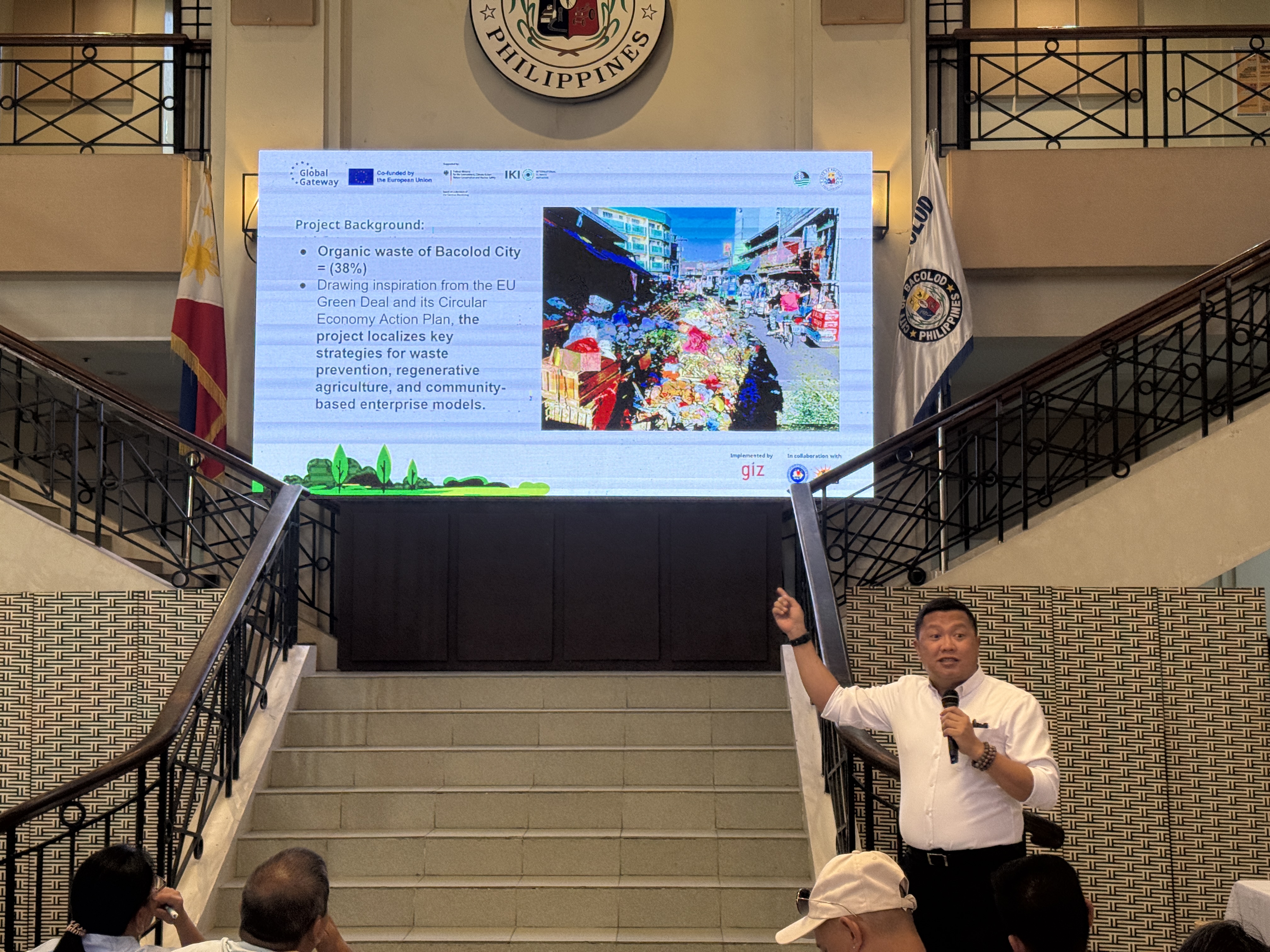
Rodjhun Navarro, Vice President for Research, Innovations and Linkages of La Consolacion College Bacolod, presented the Circular Biohubs Project and highlighted its role in converting organic waste into productive resources that support both environmental sustainability and local economic activity.
“Around 39 percent of Bacolod’s waste stream is organic. Through decentralized biohubs, barangays can convert what was once considered waste into resources that support food production, livelihood creation, and climate action,” Navarro said.
Navarro noted that circular economy systems can also support community-based enterprises, compost production, urban agriculture initiatives, and alternative feed supply chains that strengthen local resilience while opening opportunities for green investments.
Atty. Allyn Luv Dignadice, head of BENRO, expressed hope that more barangays beyond the pilot sites would integrate organic waste recovery technologies into their local solid waste management plans.
“Our goal is not only to support the pilot barangays but to inspire all barangay LGUs in Bacolod to explore innovative and practical solutions for organic waste diversion. If these technologies are adopted at the barangay level, we can significantly reduce waste going to landfill while creating livelihood opportunities for our communities,” Dignadice said.
She added that strengthening barangay-level implementation can also help position Bacolod as a model city for sustainable urban development and future green investment partnerships.
Aldwin Torquido, President of Bioflyt Agriventures, introduced black soldier fly larvae technology and demonstrated how food waste can be rapidly processed into high-protein larvae for animal feed and nutrient-rich organic fertilizer.
“Black soldier fly technology offers communities a scalable and science-based approach to managing food waste while producing products with real economic value,” Torquido said.
Pedro Dizon, Project Manager of the Negros Island Sustainable Agricultural and Rural Development Foundation Inc. (NISARD), presented vermicomposting systems and emphasized the role of earthworms in converting organic waste into soil enhancers suitable for urban and community gardening.
Caryl Depositario of the Negros Economic Development Foundation also showcased bokashi composting technology as another community-based approach to organic waste treatment and soil regeneration.
Project partners underscored that decentralized circular economy systems can create new livelihood pathways for waste workers, urban farmers, small enterprises, and community organizations while helping local governments comply with ecological solid waste management policies and emerging circular economy frameworks.
They added that projects such as Circular Biohubs can serve as gateways for partnerships with international development institutions, European technology providers, private sector firms, and investors looking to support climate-resilient and scalable waste management solutions in the Philippines.
The presentations formed part of Bacolod City’s continuing efforts to strengthen barangay compliance with ecological solid waste management policies while promoting innovation, resource recovery, climate action, and circular economy practices at the grassroots level.
For media inquiries, please contact: Marky Tumalad, mark.tumalad@giz.de