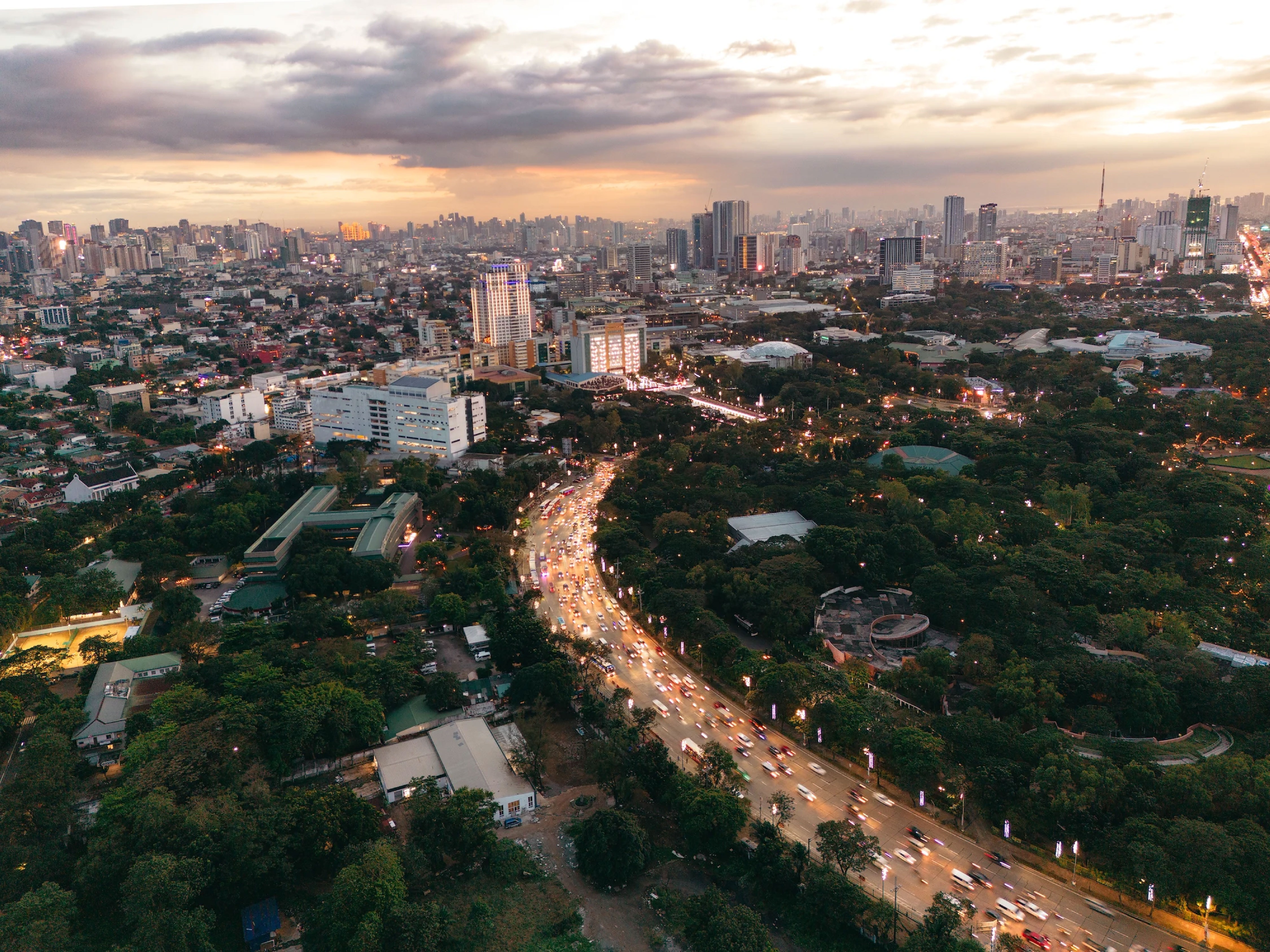
Cities are where transformation becomes tangible. They show us how sustainability isn’t just a notion but a shared and relatable practice. In the way neighborhoods handle their waste, how food is produced and consumed, and how people protect the ecosystems that make their homes livable, all these are contributing to the shift from linearity to circularity.
More than engines of technology, cities (and municipalities) have become classrooms for a smarter future: reflective of culture, shaped by ambition, and grounded in people.
Through the EU-Philippines Green Economy Partnership, twenty pioneering cities have stepped forward to show what circularity looks like in everyday life: starting with Baguio, Pasig, Caloocan, Quezon City, Puerto Princesa, Iloilo, Ormoc, Davao, Island Garden City of Samal, and Del Carmen, now welcoming the cities of San Carlos, Ilagan, San Jose Del Monte, Bacoor, Sorsogon, Maasin, Isabela, Cagayan de Oro, Koronadal, and Cotabato into the fore.
These localities are co-creating new systems, writing stronger policies, nurturing innovators, strengthening community enterprises, and making room for voices that strengthen local decision-making. Together, they are proofs that circular transitions are unfolding in the Philippines while potentially holding lessons worth sharing, scaling, and sustaining.
On World Cities Day 2025, with the global call for “People-Centered Smart Cities,” we celebrate how three localities are redefining progress: one that values people, resources, and the continuity of community well-being.
Del Carmen: Circular futures rooted in community values
In Del Carmen, circularity is a story of redemption. How a community once known for losing its mangroves is now leading a global example in protecting them. Today, the same mangrove forests anchor the island’s resilience. These valuable ecosystems now protect coasts, support fisheries, and draw travelers eager to experience nature that thrives.
Mayor Alfredo Coro II’s leadership in the island municipality of Del Carmen in Surigao del Norte is anchored in a simple belief: “circularity must begin with what a community values most.”
Mayor Alfredo Coro II dialogue during a storytelling and visioning activity with the youth of Del Carmen
Richmond Seladores / UNDP Philippines
For the municipality, it means building a future where tourism sustains culture, where livelihoods reflect pride in local heritage, and where young people grow up seeing stewardship as a shared duty.
Residents are active actors in this transformation. They participate in dialogues, run resource recovery systems, and integrate circularity into schools and youth programs. Coconut farmers, fisherfolk, and small businesses are seeing the value of protecting the environment that provides for their livelihoods. As part of their commitment, Del Carmen has started building on ‘Circular Futures’––an approach to circularity that emphasizes strengthened partnerships within and beyond the island, allowing opportunities to test solutions with experts, investors, and neighboring towns.
For the island municipality, circularity is lived every day: in the way community is honored, ecosystems are protected, and opportunities are shared. It is a reminder that sustainability succeeds when its roots are cultural and collective.
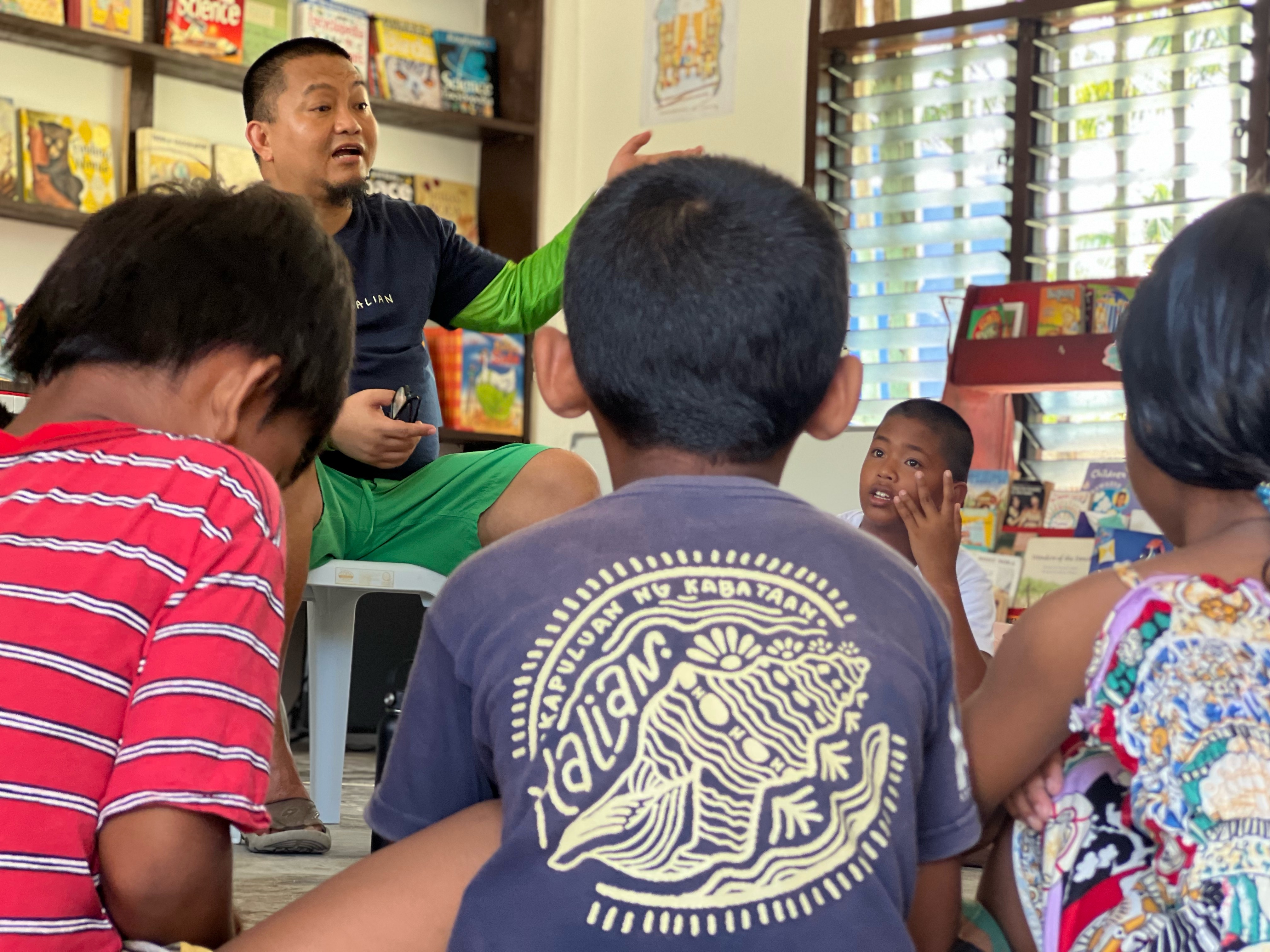
Imagining a circular future with the youth of Del Carmen
Richmond Seladores / UNDP Philippines
Quezon City: Feeding the city, closing the loop
Quezon City’s circular transition begins with what nourishes us. However, when a significant portion of the city’s waste stream is from food, we are reminded that hunger and waste are two sides of the same challenge.
The city’s response: treat food as a resource to protect, not dispose of.
Urban farms and learning sites now anchor a circular food system, turning scraps into compost, soil into produce, produce into meals that nourish and sustain communities. Demonstration spaces, such as Sunnyville Farm, bring together farmers, vendors, schools, and microentrepreneurs to recover value from what would otherwise be lost. These spaces fuel both environmental gains and stronger food access, especially low-income households vulnerable to price shocks. The city also stands to commit to reducing food waste through a policy. A proposed circular food system ordinance and strengthened green procurement measures signal the city’s shift from simply managing waste to actively preventing it—designing solutions upstream, where they matter most.
In support of the city-wide shift, a community grant is helping scale food rescue and distribution as well as waste recovery across selected barangays. This support strengthens the city’s focus on reconnecting households, market vendors, and small businesses to local composting and urban agriculture systems. It allows more communities to take part in closing the loop.
Quezon City’s strategy is simple: if food sustains us, then circularity must sustain food. In this endeavor, the city is designing a future that is not only cleaner but more nourishing and dignified for its citizens.
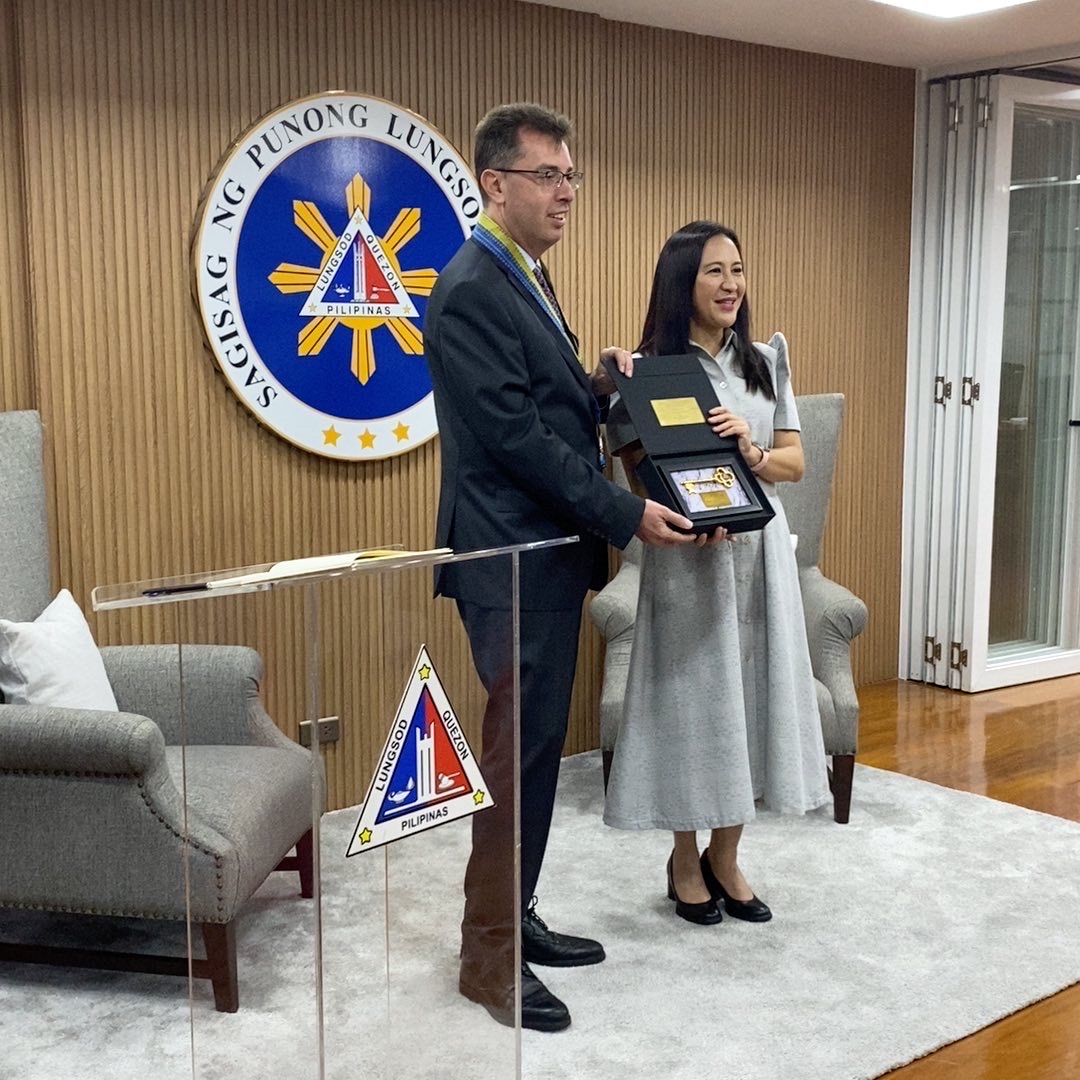
EU Ambassador Massimo Santoro and Mayor Joy Belmonte
Pasig City: Innovation for scale, for all
Pasig’s circular story is powered by people who refused to wait for change.
Hardworking women transforms textile waste into market-ready products. Dedicated waste pickers who innovate finally gained recognition. Actively involved queer community who saw clutter as an opportunity for creativity. The city understood that transformation was already happening in its communities; it simply needed to be supported, strengthened, and sustained.
In 2023, Pasig took a decisive step by opening the Innovation for Circular Economy (ICE) Hub co-designed with development partners to jump-start inclusive innovation for plastics and organic waste in collaboration with United Nations Development Programme with support from the Government of Japan.
From what was originally envisioned to be a materials recovery facility has now evolved into a living space. ICE Hub has since become a shared testing ground where circular ideas grow into social enterprises where upcycling collectives and circular start-ups now earn more securely from skills that were once informal or undervalued. It became a story of people reclaiming dignity through circular innovation.
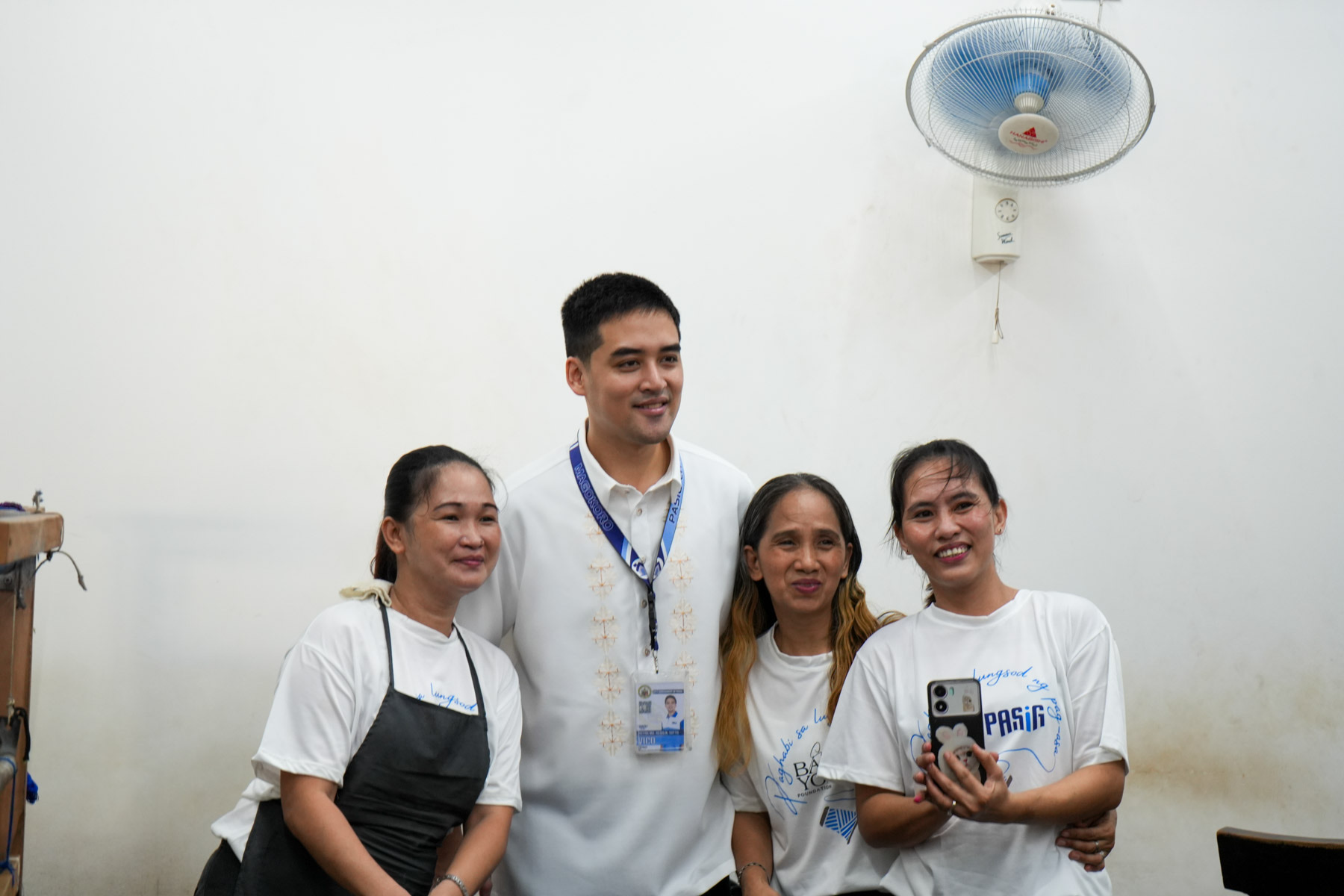
Mayor Vico Sotto with the women weavers of ICE Hub
Earl Paulo Diaz / UNDP Philippines
Infrastructure has been reshaped to reflect the realities of those who keep the system running. Material Recovery Facilities were redesigned to be inclusive, with safe work areas, and free and accessible tools and spaces that respond to the needs of informal workers, micro-entrepreneurs, women, and local leaders who form the backbone of the circular chain. In the experience of a women-led upcycling enterprise at the Hub, its members are now earning several times more than the minimum wage, proving that circular innovation can strengthen livelihoods as much as the environment.
Linking these community gains with investment plans and digital systems ensures progress does not remain scattered or short-lived. In Pasig, innovation is not just about adopting new technologies; it is about nurturing relationships, trust, and collaboration, thriving because communities see themselves not as recipients of change, but as co-builders of a more equitable economy.
A people-centered smart city, Pasig shows, is one where everyone has a stake in shaping the future.
Broadening the Circle
Del Carmen teaches us that circularity succeeds when it is rooted in shared identity and community pride. Quezon City shows that when cities nourish what sustains them, circularity can strengthen both climate action and food security. Pasig proves that innovation becomes transformative when everyone, especially those often left out, is invited not just to participate but to lead.
These stories affirm a core truth: circularity becomes real when people claim it as their own. Technology and policy matter but so do trust, collaboration, and the courage to rethink the usual ways of working.
As the EU-PH Green Economy Partnership Specific Objective 2 (Green LGUs) expands to more cities across the Philippines, the task ahead is to deepen what has already begun: advancing inter-local cooperation, designing financing pathways that support long-term circular transitions, and ensuring that every community can participate and benefit.
This collective effort is made possible through the European Union’s support, the leadership of the Department of Environment and Natural Resources, the co-leadership of the Department of the Interior and Local Government for the Partnerships’ Specific Objective 2 (Green LGUs), and the implementation of the United Nations Development Programme together with partners on the ground.
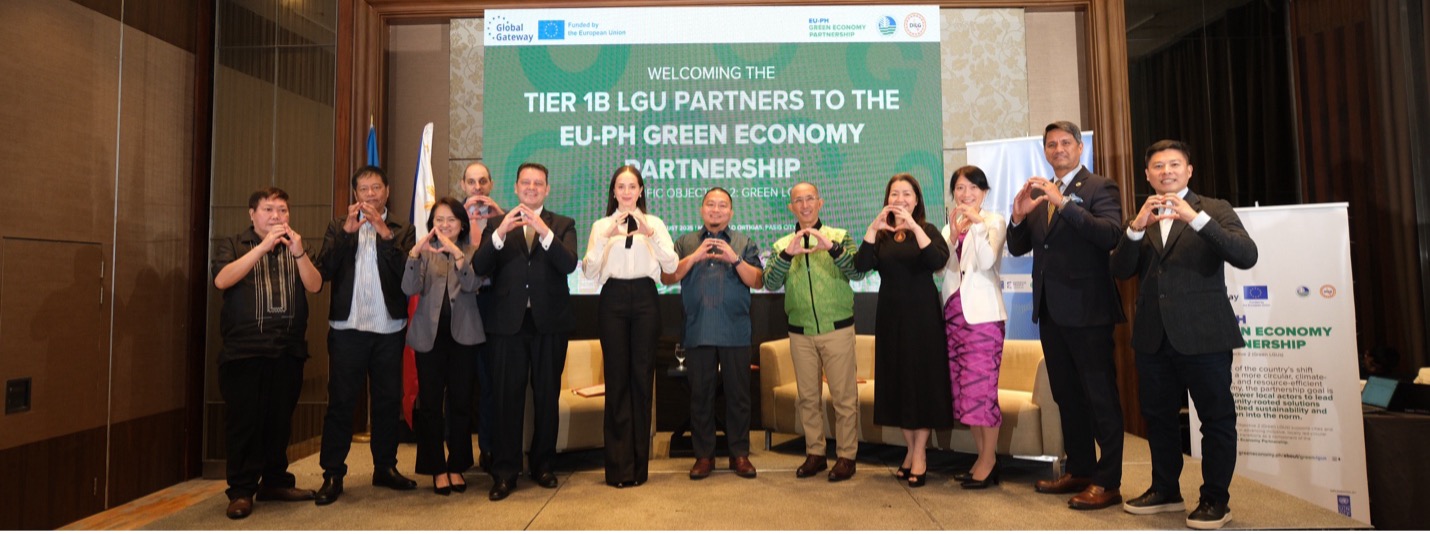
Chief executives and representatives of collaborating LGUs under the EU-PH Green Economy Partnership together with DILG, EU and UNDP representatives.
Earl Paulo Diaz / UNDP Philippines
World Cities Day reminds us that smart cities are not defined by what they build, but by who they uplift. The circle broadens as more cities learn from one another, share solutions, and continue integrating circularity into our way of life.
A greener economy becomes possible when cities lead, and everyone belongs in shaping that progress.
About the EU-Philippines Green Economy Partnership:
Funded by a €60 million (₱3.67 billion) grant from the European Union, the EU-PH Green Economy Partnership will run from 2023–2028 with the Department of Environment and Natural Resources (DENR) as lead implementing agency, in collaboration with the Department of Trade and Industry, Department of Energy, and the Department of the Interior and Local Government. The partnership supports circular economy, renewable energy, waste reduction, and climate resilience. Co-funded by Germany’s development agency GIZ, it is implemented by UNDP Philippines, Expertise France with the Global Green Growth Institute (GGGI), and the International Finance Corporation (World Bank Group). EU-PH Green Economy Partnership is part of the European Union’s Global Gateway initiative, which fosters green transition and sustainable investments through trusted, inclusive partnerships.
About Specific Objective 2 (Green LGUs):
The Green LGUs Project is a key component of the EU–Philippines Green Economy Partnership that supports cities and municipalities in advancing inclusive, locally led circular economy (CE) transitions. Co-led by the Department of the Interior and Local Government (DILG) and implemented by UNDP Philippines, SO2 empowers local actors to co-create circular solutions that reduce waste, regenerate ecosystems, and improve everyday systems through sustainable, community-rooted practices. It works to strengthen capacities, develop enabling policies, and unlock support across sectors—including local governments, civil society, the private sector, and marginalized groups—ensuring that circularity becomes not only practical, but part of the norm.