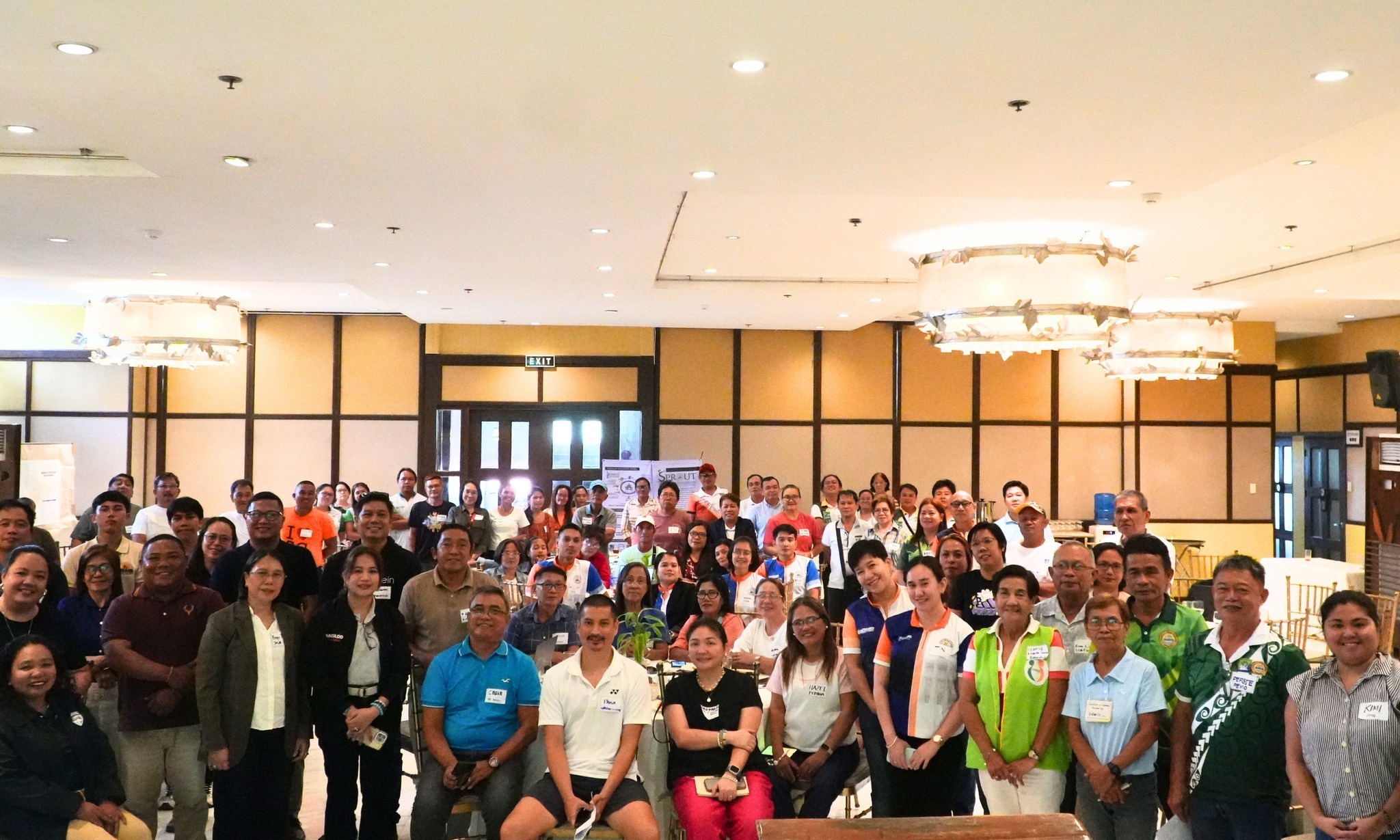
For many Bacolod residents, food scraps from homes, markets and businesses usually mean foul odors, clogged drains, higher hauling costs and more waste sent to disposal sites. A new circular economy initiative wants to turn that everyday problem into compost, animal feed inputs, urban gardens and livelihood opportunities for barangays.
Supported by the European Union-Philippines Green Economy Partnership, the Circular Biohubs Project joined the Bacolod City Inception Workshop last 19-20 May 2026, bringing together government agencies, local officials, academic institutions, technical partners and community stakeholders to align waste solutions with Bacolod’s broader solid waste management priorities.
The project, implemented by La Consolacion College Bacolod, in cooperation with GIZ Philippines, DENR-EMB, Bacolod Environment and Natural Resources Office, barangay local governments, NISARD, Bioflyt Agriventures and other partners, promotes decentralized organic waste valorization systems. In simpler terms, it aims to help communities process organic waste closer to where it is generated instead of sending everything to centralized disposal facilities.
For barangays, that could mean less waste to haul, cleaner surroundings and new livelihood models built around Black Soldier Fly technology, vermicomposting and urban organic gardening.
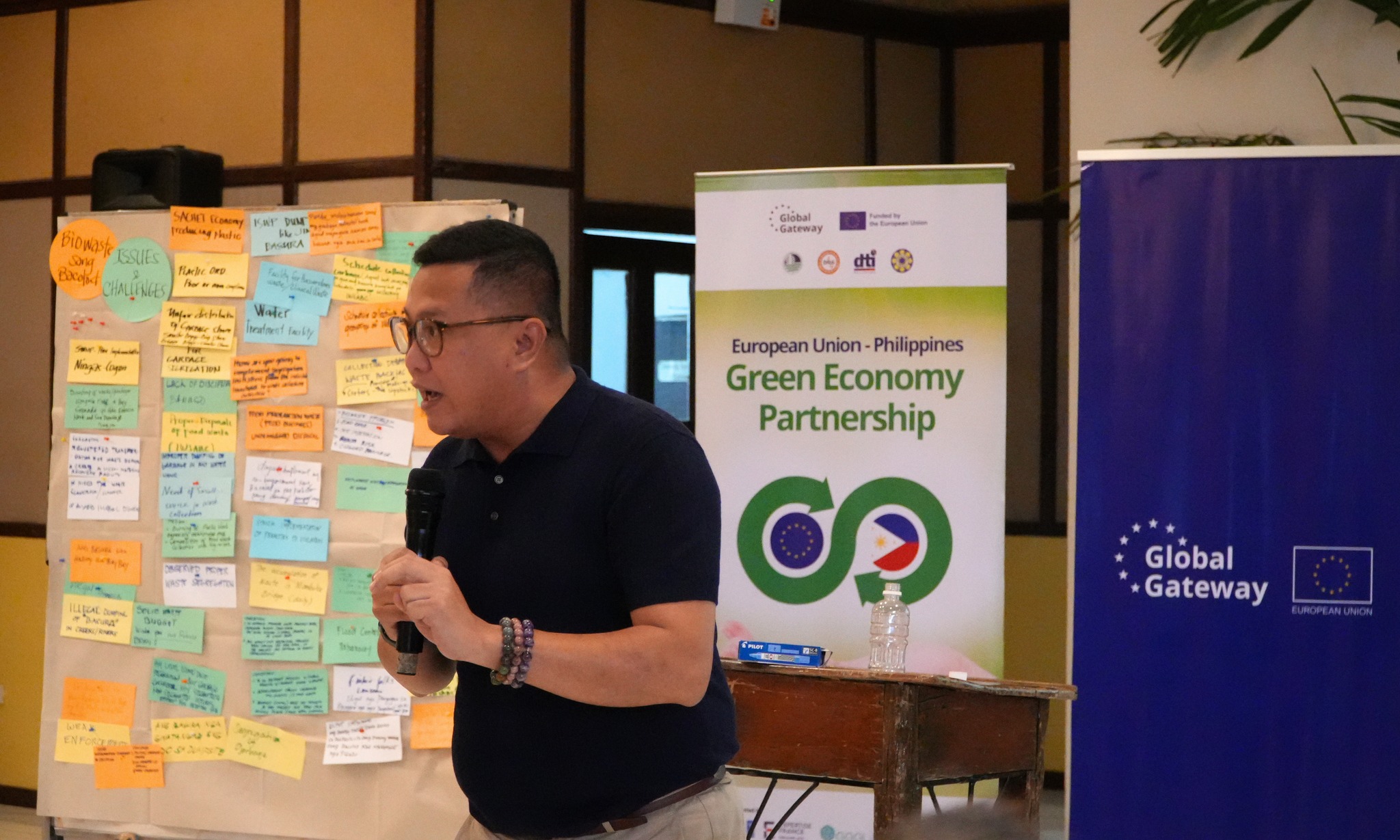
Dr. Rodjhun B. Navarro, director of the Circular Biohubs Project and vice president for Research, Innovations and Linkages of LCC Bacolod, presented the project’s targets during the workshop, including the processing of 25.5 tons of organic waste per month across project sites.
“This project is not just about waste reduction,” Navarro said. “It is about showing that organic waste can become a resource for food production, livelihood creation and community-based climate action.”
The project’s model combines several practical approaches. Black Soldier Fly larvae can help break down food and organic waste while producing biomass that may support agricultural and feed-related value chains. Vermicomposting converts biodegradable materials into soil enhancers. Urban gardening can use compost outputs to support food production in community gardens, schools, barangays and other available spaces.
For ordinary households, the most immediate benefit begins with segregation. When food waste is properly separated, barangays can reduce mixed garbage, limit odor and pests, and improve the quality of materials that can be processed through composting or BSF systems. For market vendors and local businesses, the project offers a possible pathway for managing daily organic discards in a more productive and cost-efficient way.
For women, youth, waste workers and community groups, the project also opens opportunities for training and green work. These may include waste sorting, compost production, garden maintenance, product development, nursery operations and small enterprise activities linked to circular agriculture.
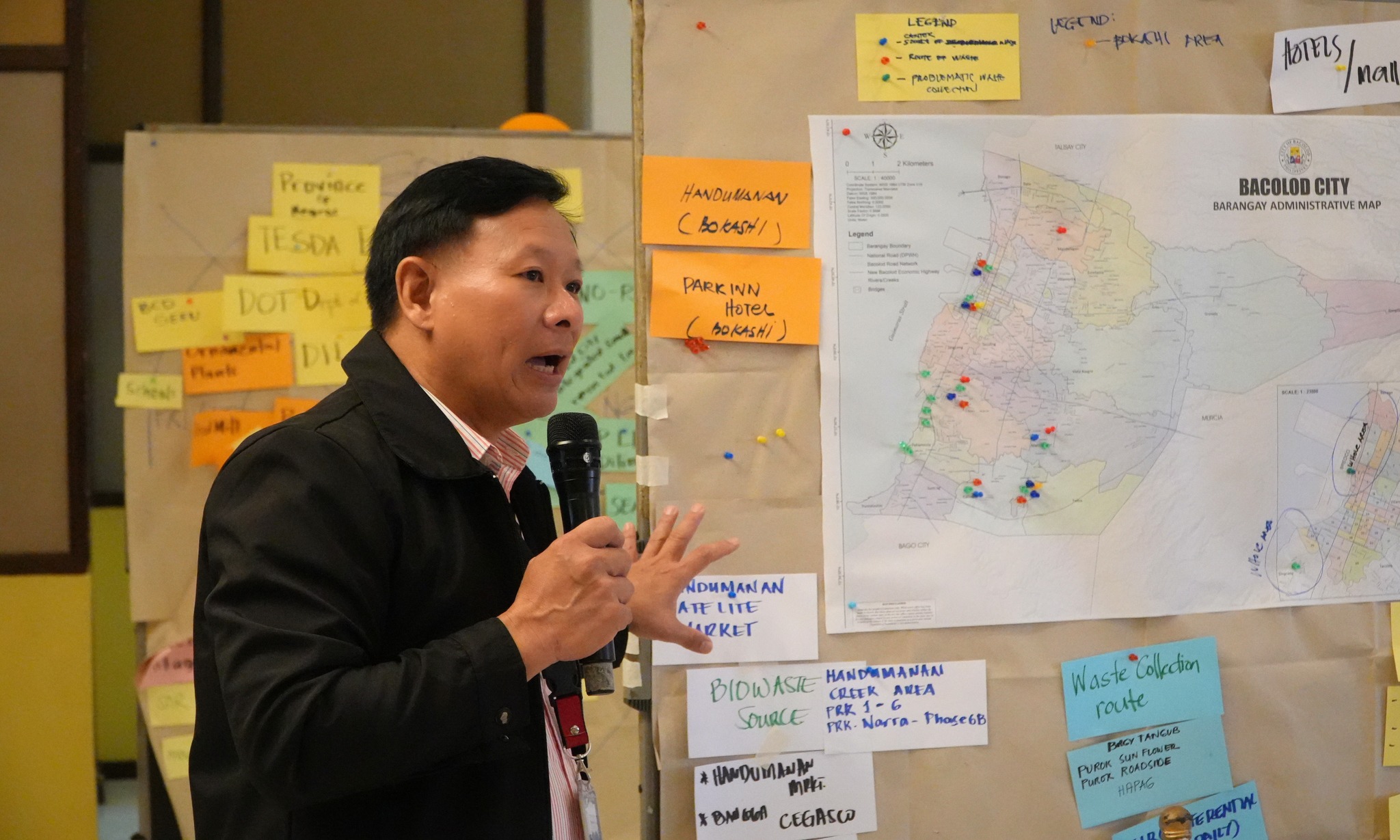
Mr. Terence Paul Dacles, senior technical adviser of GIZ Philippines, emphasized the importance of synergy among the demonstration projects and local partners.
“The strength of this initiative is collaboration,” Dacles said. “When barangays, the city government, academic institutions, the private sector and communities work together, waste management becomes more than compliance. It becomes a platform for innovation, jobs and inclusive development.”
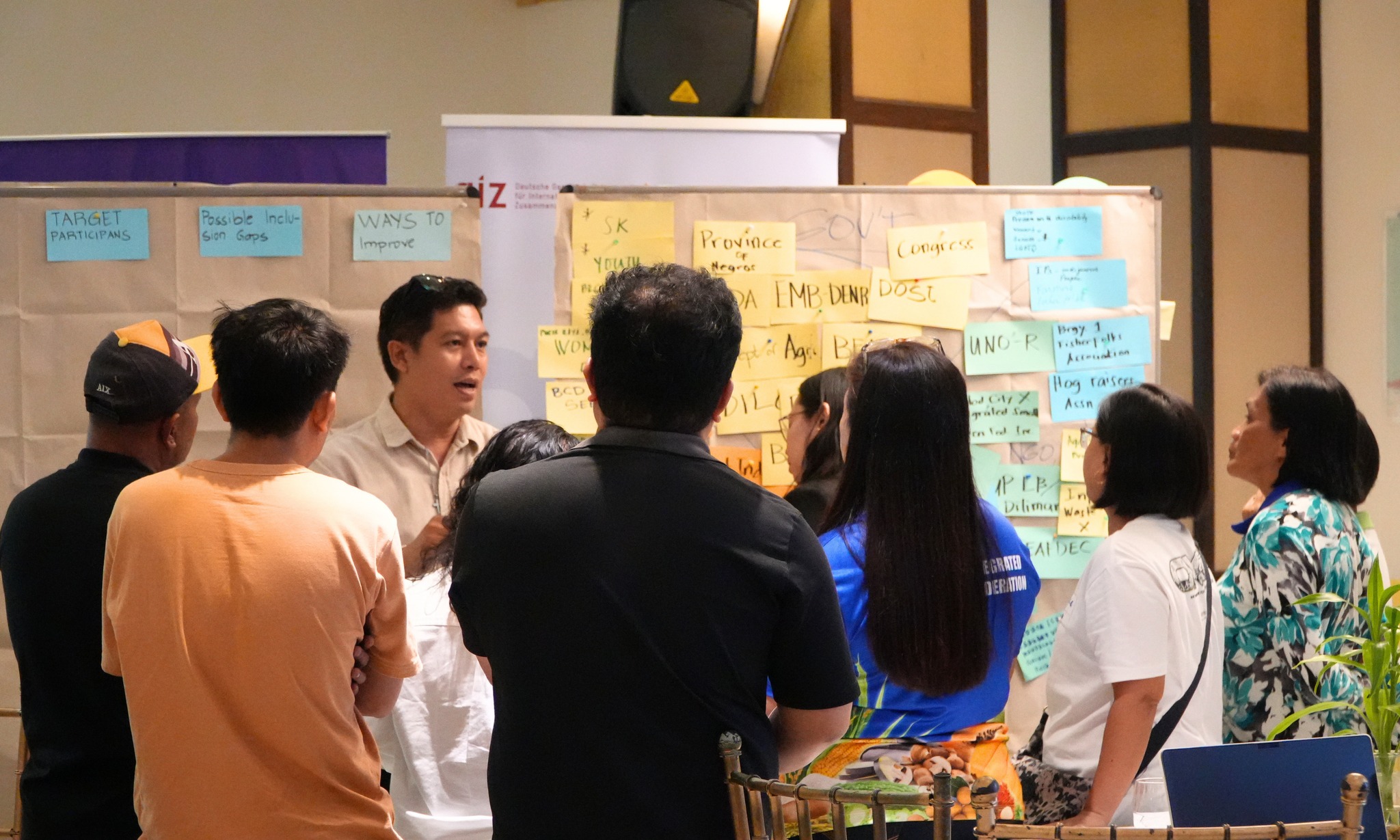
The two-day inception workshop provided space for project presentations, stakeholder mapping, organic waste mapping, investment discussions, sustainability planning and Gender Equality, Disability and Social Inclusion, or GEDSI, orientation. The GEDSI component is important because waste work and community gardening often involve sectors that are underrecognized in formal development planning, including women, persons with disabilities, informal waste workers and low-income households.
Atty. Allyn Luv Dignadice, head of the Bacolod Environment and Natural Resources Office, presented Bacolod City’s solid waste management programs and underscored the role of barangay LGUs in making waste diversion work at the community level.
“Barangays are at the front line of solid waste management,” Dignadice said. “Programs like this can help strengthen local capacity, especially when communities are trained, organized and supported with practical technologies.”
The Circular Biohubs Project also connects to Bacolod’s urban development and food security priorities. By linking organic waste diversion with the HAPAG program and other urban gardening efforts, the project can help communities produce vegetables and soil amendments while reducing the volume of biodegradable waste sent to disposal sites.
The environmental gains are also significant. Project materials presented during the workshop estimate that landfilled food and organic waste can generate about 0.5 to 1.0 ton of carbon dioxide equivalent for every ton disposed. With a target of 25.5 tons of organic waste processed per month, the project estimates potential avoidance of 12.75 to 25.5 tons of carbon dioxide equivalent monthly, or 153 to 306 tons yearly.
That matters in a city where solid waste management is not only a sanitation issue but also a climate issue. Organic waste in landfills produces methane, a powerful greenhouse gas. Diverting food waste to BSF systems, vermicomposting and gardens can help reduce emissions while creating value from materials that would otherwise be discarded.
The workshop also highlighted the need for resource mobilization and long-term sustainability. Beyond the installation of technologies, partners discussed how barangays can maintain operations, engage local workers, identify waste sources, develop markets for outputs and create ownership among residents.
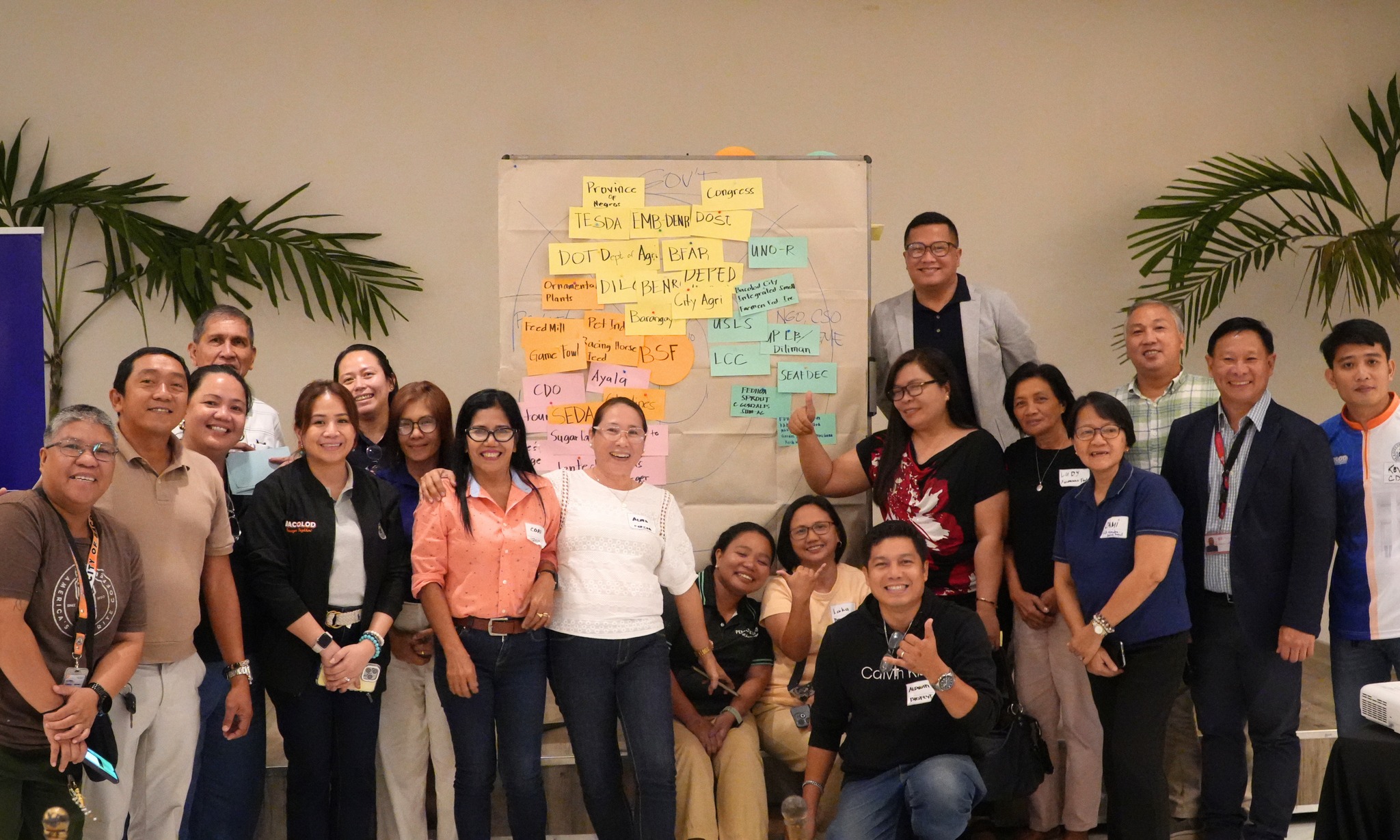
The Circular Biohubs Project is part of the European Union-Philippines Green Economy Partnership, a flagship program under the European Union’s Global Gateway initiative supporting the Philippines’ transition toward a green and circular economy. In Bacolod, that transition is being tested at the community level, where waste is generated daily and where practical solutions can directly affect families, workers and local enterprises.
For the project team, the next steps include continued coordination with barangay LGUs, technical training, site development and the rollout of decentralized waste processing models. The long-term goal is not simply to build facilities, but to help communities operate systems that are useful, inclusive and financially sustainable.
If successful, the Circular Biohubs Project could offer Bacolod a working model for turning organic waste into cleaner neighborhoods, greener livelihoods and stronger local food systems — one barangay, one garden and one waste stream at a time.
For media inquiries, please contact Marky Tumalad (mark.tumalad@giz.de)